Overview
Video production turned into an optimized workflow
Cyrano is a video platform for health care systems. It lets a hospital produce its own branded video in-house, without an agency or a crew, and share it wherever its audiences already are. Teams used it three ways. Video marketing reaches the public, with things like provider bios, facility tours, and patient testimonials. Video communications keeps staff aligned through weekly updates, internal newsletters, and breaking news. Video messaging reaches patients one to one, from telehealth reminders to pre-op and post-op instructions. The payoff was speed and cost: broadcast-quality video in a single 30-minute session instead of weeks of agency work.
I led design and helped lead product strategy across the platform for six years. I owned the design of the whole system, the UI and everything underneath it, and I worked with the CTO, the CEO, customer success, and video editors on the strategy behind it. The decisions that shaped the product were as much about adoption as production.
Product strategy was a collaborative effort. It ran through PRDs and customer interviews with the CTO, the CEO, customer success, and a partner on the client side, and it was shaped by what we were learning in real time. The pandemic made the need obvious: care teams had to reach staff and patients on video, remotely, and fast.
Led design and helped lead product strategy across 16 products over six years. Worked with the CTO on architectural constraints, customer success on real-world workflows, and health care marketing and video editors on content.
The Problem
Video was too slow and too expensive to scale.
Health care systems run on alignment. Staff need to know what changed this week. Patients need to hear from the person treating them. The community needs a reason to choose you. Email does not do that. Video does.
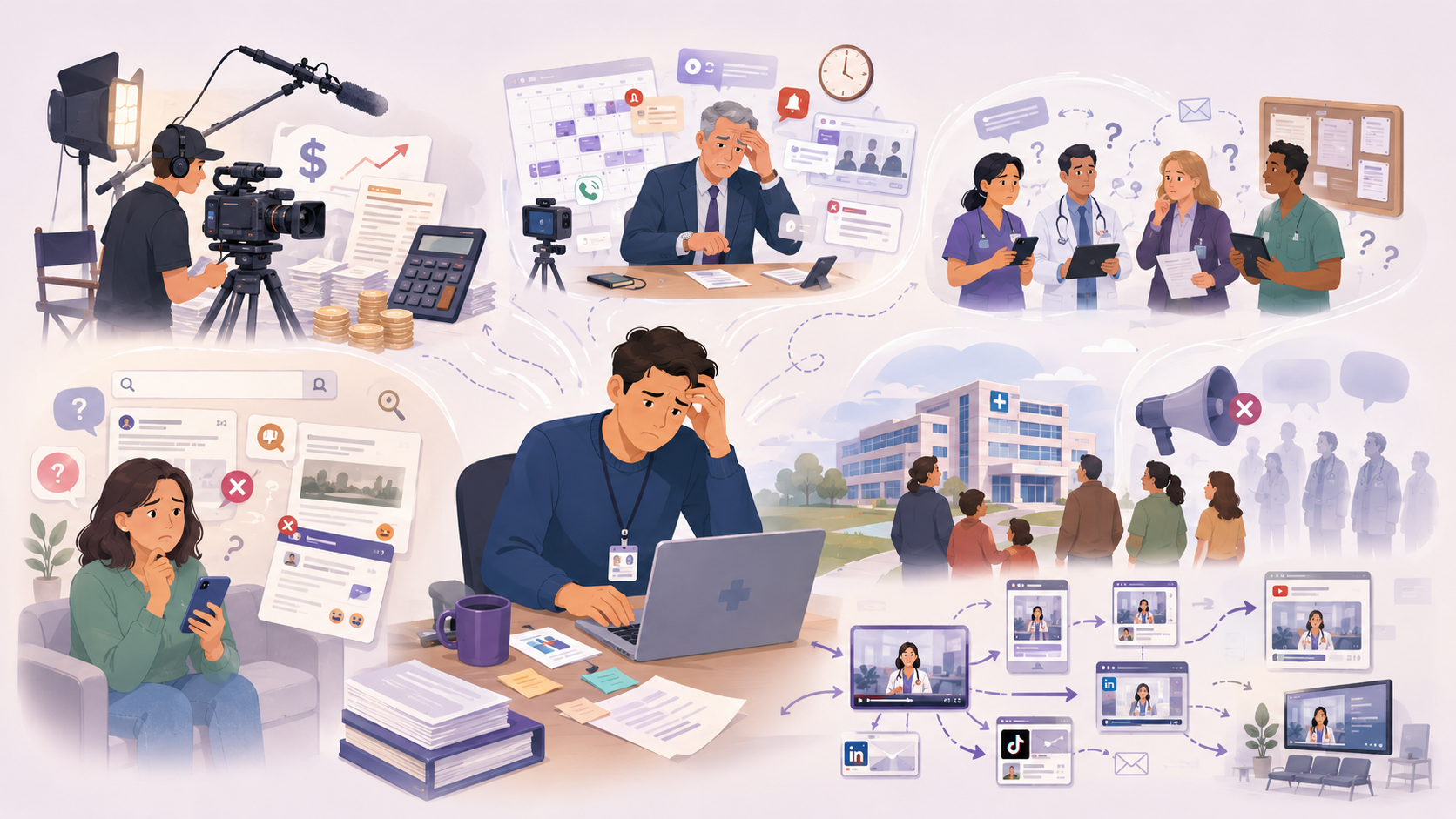
But video production lived in the world of agencies and crews. A traditional shoot cost tens of thousands of dollars and took weeks, so only the biggest moments got funded. Everything else stayed in email.
-
Production cost was prohibitive.
Traditional videography costs ten thousand dollars a shoot. Hospitals need thousands of messages a year: safety updates, policy changes, leadership announcements, patient education. The math doesn't work.
-
Executive scheduling was impossible.
A CEO can't clear a full day for one shoot. No second takes, no multiple messages in one session. Video became an occasional luxury, not a regular channel.
-
Internal communication broke down.
All-hands meetings were impossible during COVID. Email newsletters didn't land. Staff stayed uncertain about safety, policy, and direction.
-
Distribution fragmented across multiple workflows.
One video needed different crops for YouTube, TikTok, LinkedIn, and internal email. One message became four versions.
-
Community voice was silent.
The hospital's message to the community was newsletters and ads. Physician spotlights and service line stories never shipped.
-
Patient trust had no channel.
Patients lacked authentic information. Misinformation filled the gap. Physician bios and testimonials were never produced.
The Core Tension
When speed and scale became survival
The pandemic is what made the gap impossible to ignore. Policy changed daily. Staff needed direction by the end of the shift, not the end of the month. Patients needed to hear it from a physician, not read it in a press release. All-hands meetings were off the table and email was not landing. For the first time, how fast a hospital could communicate was an operational problem, not a marketing one.
The math still did not work. A ten thousand dollar shoot is a luxury reserved for the big moments. Everything else gets deprioritized into a backlog where it dies. Staff stay uninformed. Patients stay anxious. Community reputation does not build. Leadership stays visible only in the biggest announcements, not in the steady, authentic presence that actually moves people.
The fix was never better cameras or faster editors. It was making video production as fast and as cheap as email, so a hospital could do it at the scale the mission demanded.
The Solution
Cost effective video communication at scale
The design problem was separating creative decisions from logistical ones. A traditional shoot bundles them, which is why it costs ten grand and takes a week.
Cyrano locks every creative decision before anyone records. What should be said goes into the storyboard. How it should be framed is specified in the scene. How it should look is set by templates and brand. By the time a person sits down to record, all the creative work is done.
The rest is a kit and training. One staff member plus the person on camera records a full session in 30 minutes with no crew and no editing.
Distribution is the other half. One recording, formatted once, lives everywhere it needs to: YouTube, TikTok, LinkedIn, internal email, patient-facing share pages. The hospital makes one thing and the platform multiplies it into the thousand things they need.
1. Preproduction: Storyboards
Storyboard workflows that turn messaging chaos into succinct Video communication.
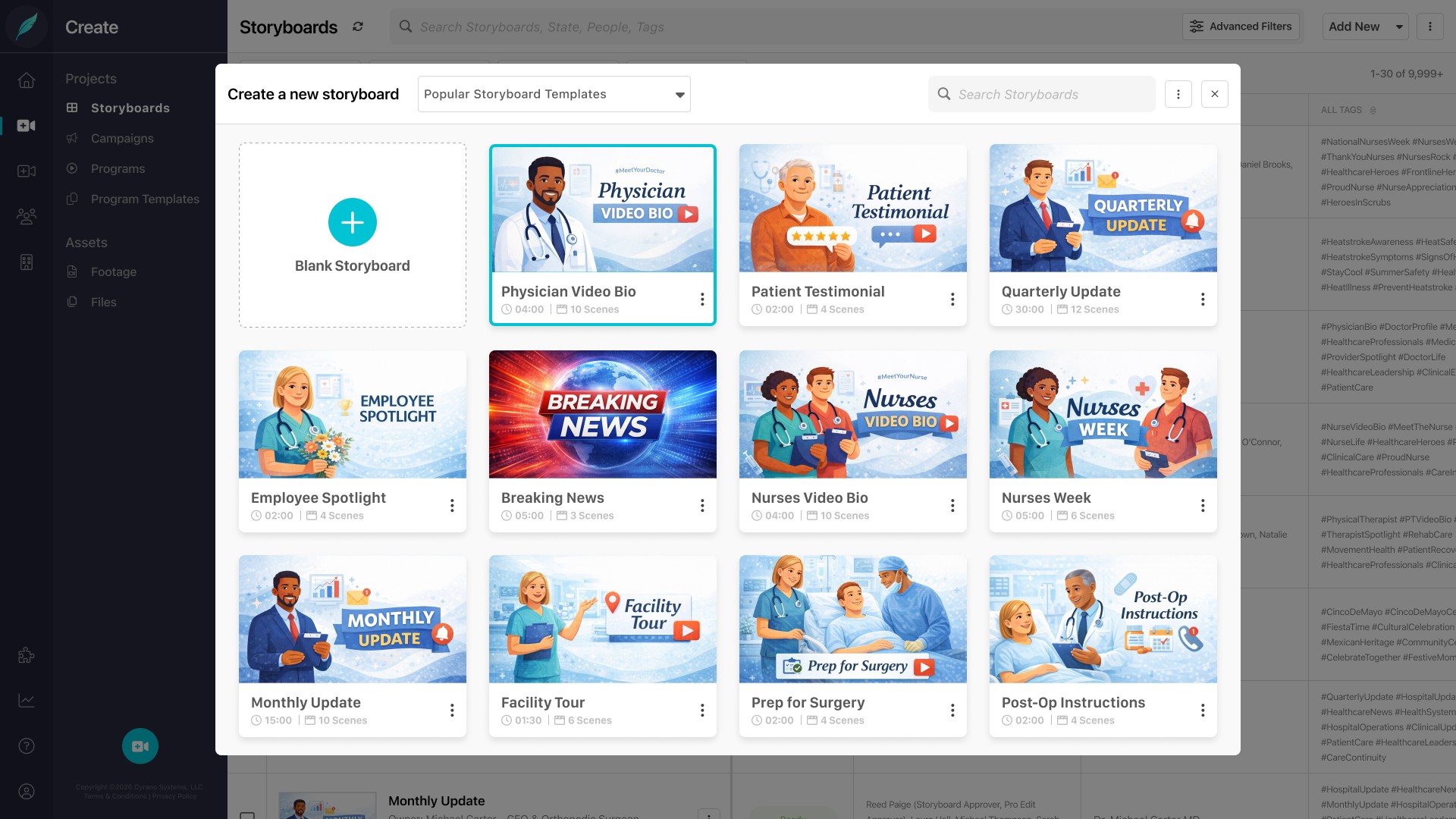
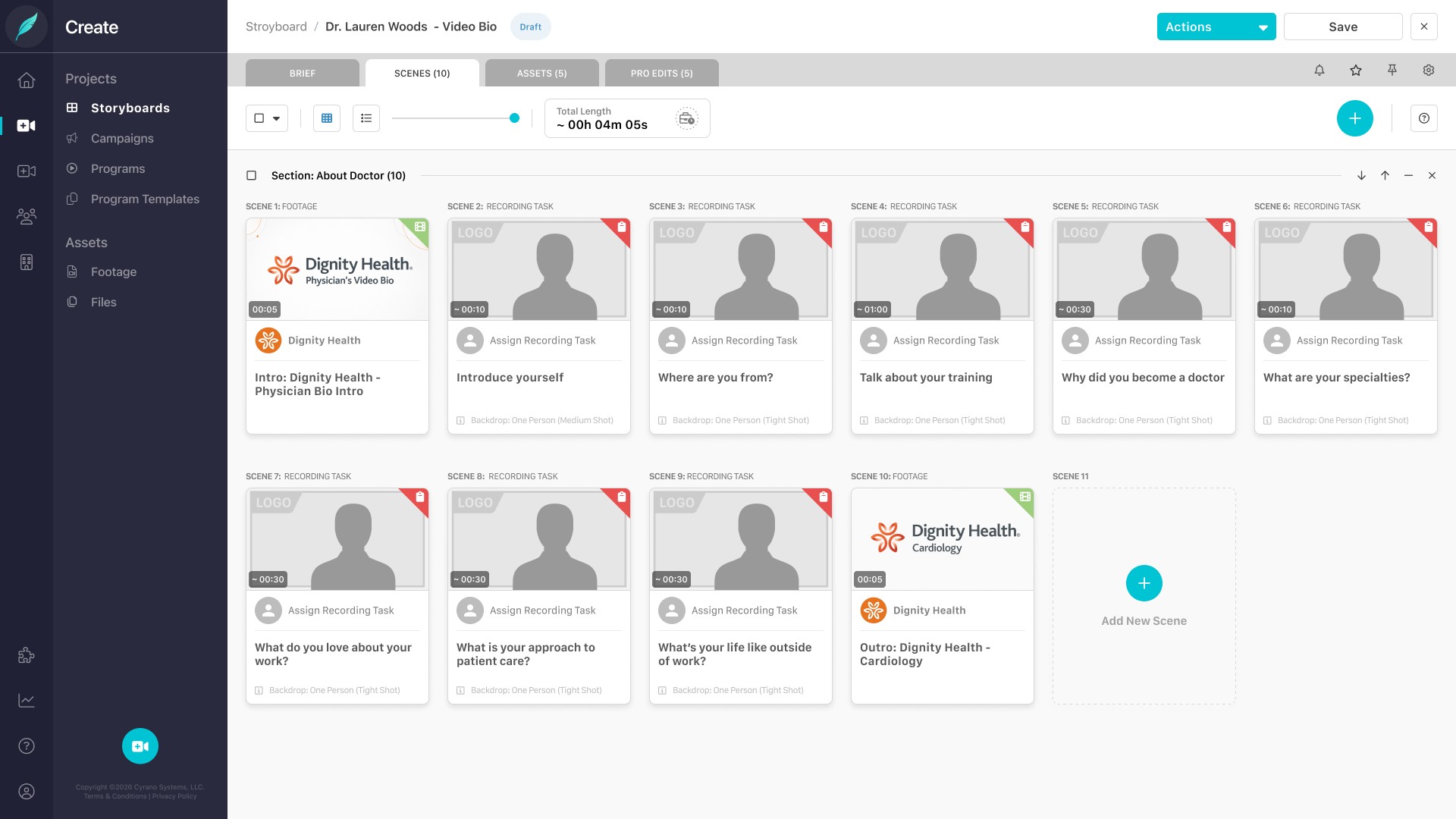
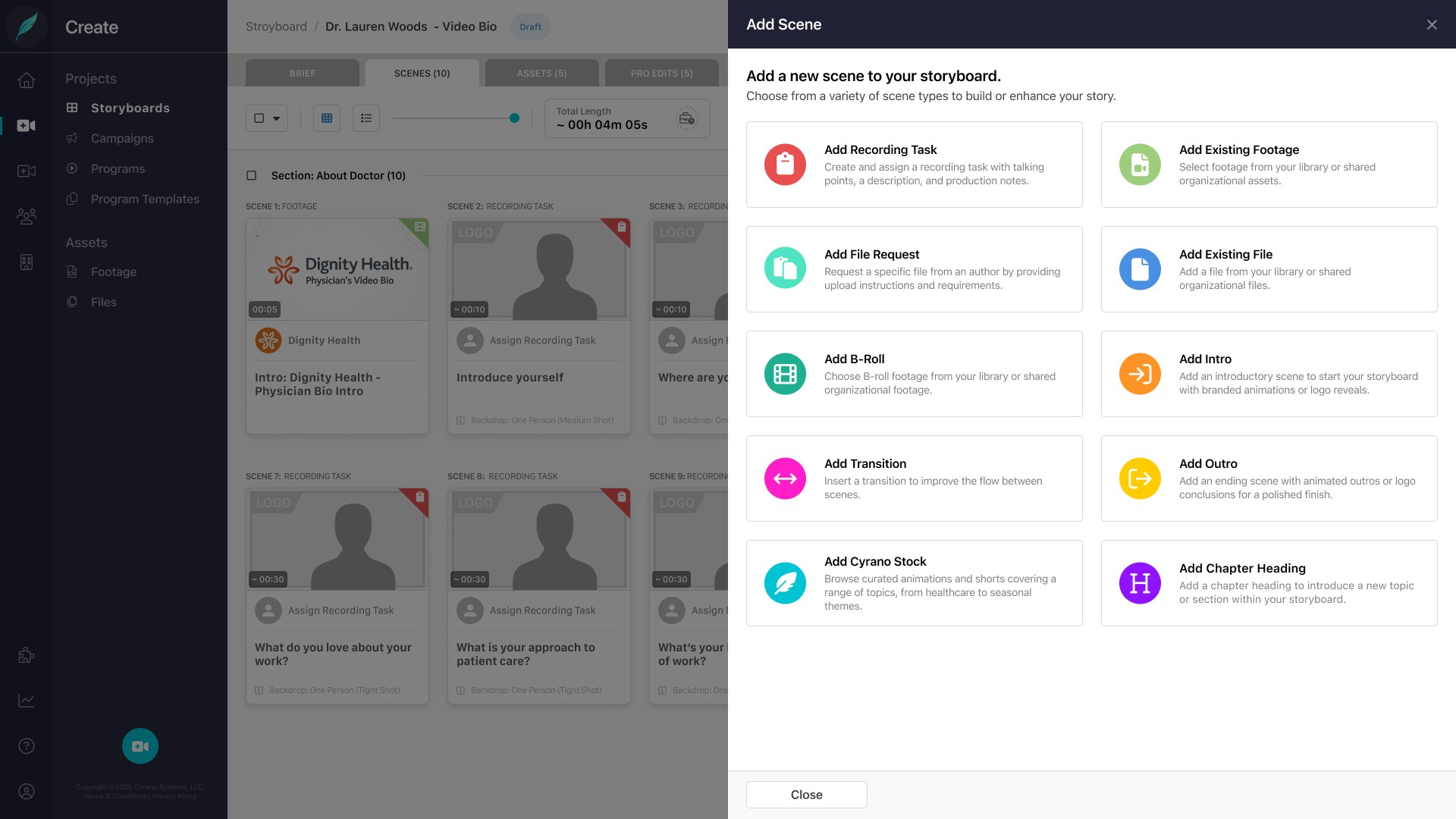
I collaborated with marketing, our CTO, and customer success to turn a messy planning process into a structured pre-production workspace. I designed four tabs: brief, scenes, assets, and pro edits, each solving a specific production challenge. In scenes, teams built their narrative by arranging elements like recording tasks, intros, transitions, and existing footage. Recording tasks worked like teleprompter prompts, giving contributors clear talking points, timing, shot types, and notes, so they knew exactly what and how to deliver. Assets centralized everything else, graphics, music, brand guides, bios, PDFs, and more. On top of that, we created reusable storyboard templates for common video types, such as physician bios, patient testimonials, employee spotlights, and quarterly updates. They were informed by marketing and customer success, then refined through analytics and client feedback. Instead of starting from scratch, teams started with a proven structure that aligned everyone before anyone pressed record.
 Remove the Blank Page Problem
 Let the Story Dictate the Structure
 Extend Templates Without Breaking Them
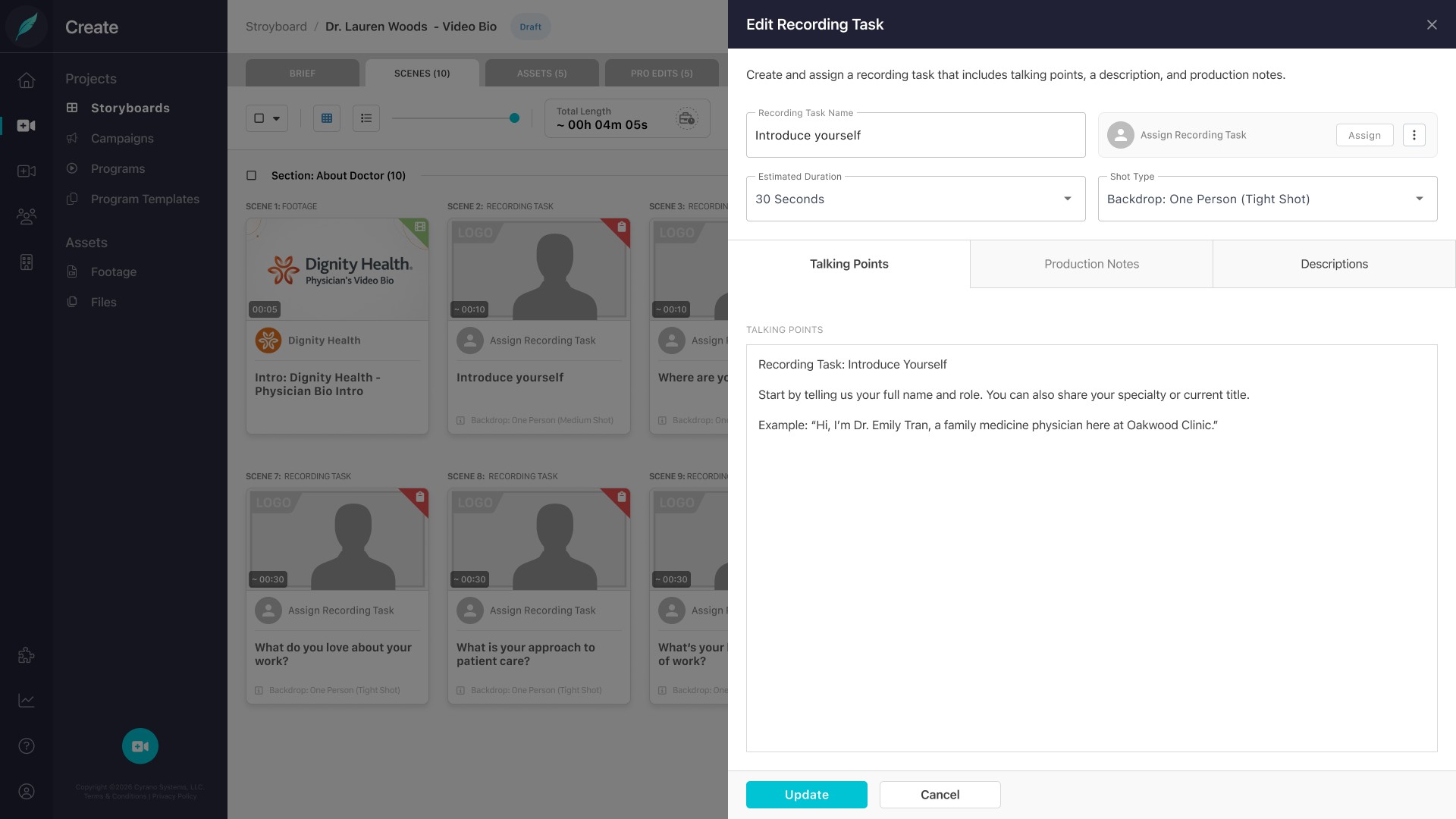 Make Every Decision Before the Camera Turns On
Remove the Blank Page Problem
Templates tailored to healthcare content: physician bios, patient testimonials, quarterly updates, breaking news. Each one presets talking points, brand guidelines, and editing preferences, so teams start with structure instead of an empty storyboard.
2. Production: Cyrano Studio App and Kit
Recording workflows designed for flow, not friction.
I partnered with our CTO, dev team, and customer success to turn recording into an assembly line of tasks. The Cyrano Studio app presented clear on-screen prompts, talking points, and timing, while a Bluetooth remote let people cycle through tasks across multiple storyboards in one sitting. So, for example, a CEO might sit for 30 minutes and record tasks for marketing, internal comms, and one-to-one messages back-to-back without rethinking setups or prompts. The kit made it portable and dependable in any room. The outcome, faster throughput, less friction, and consistent delivery across many videos in one sitting.
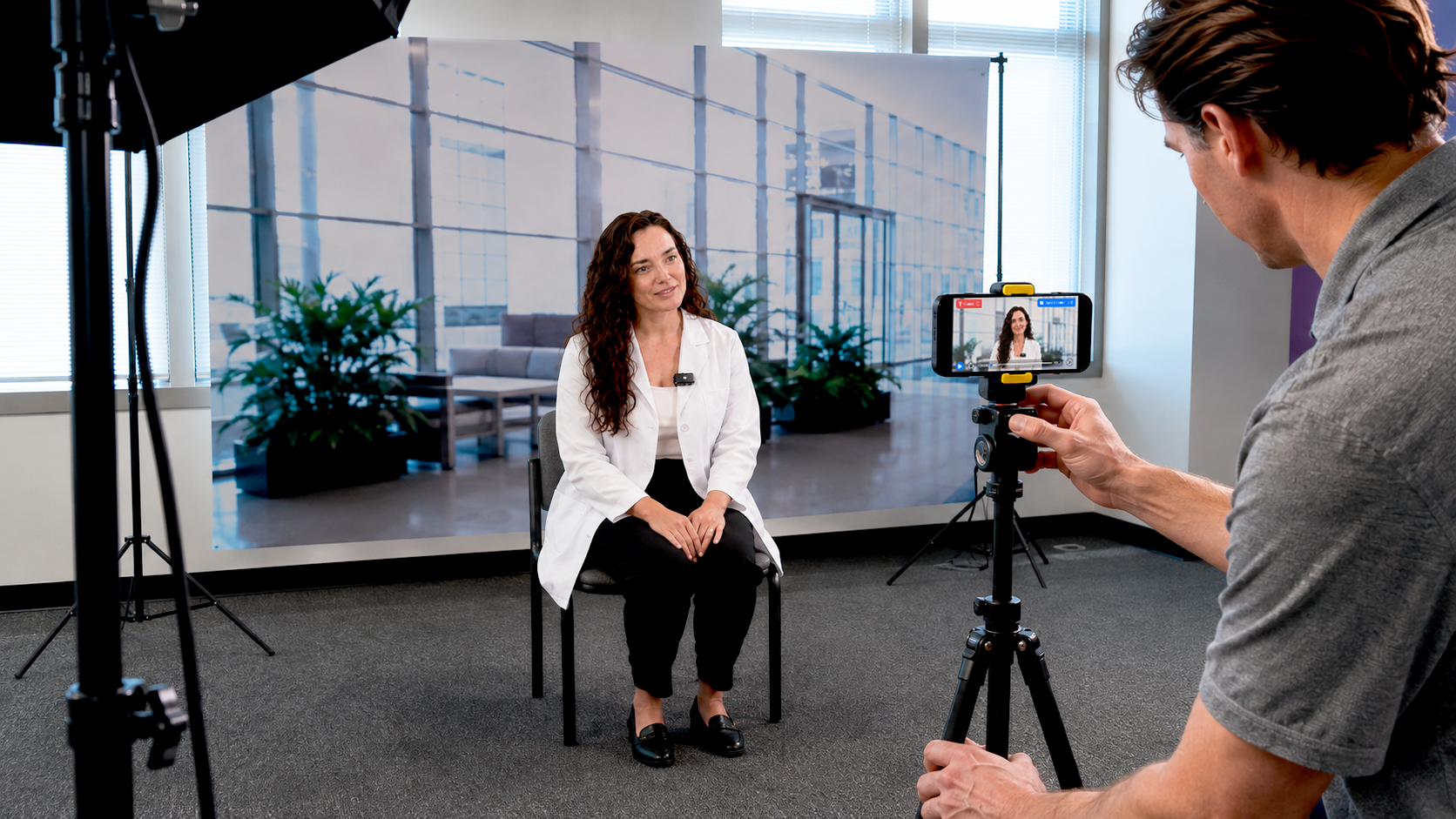 A Professional Studio That Fits in a Flight Bag
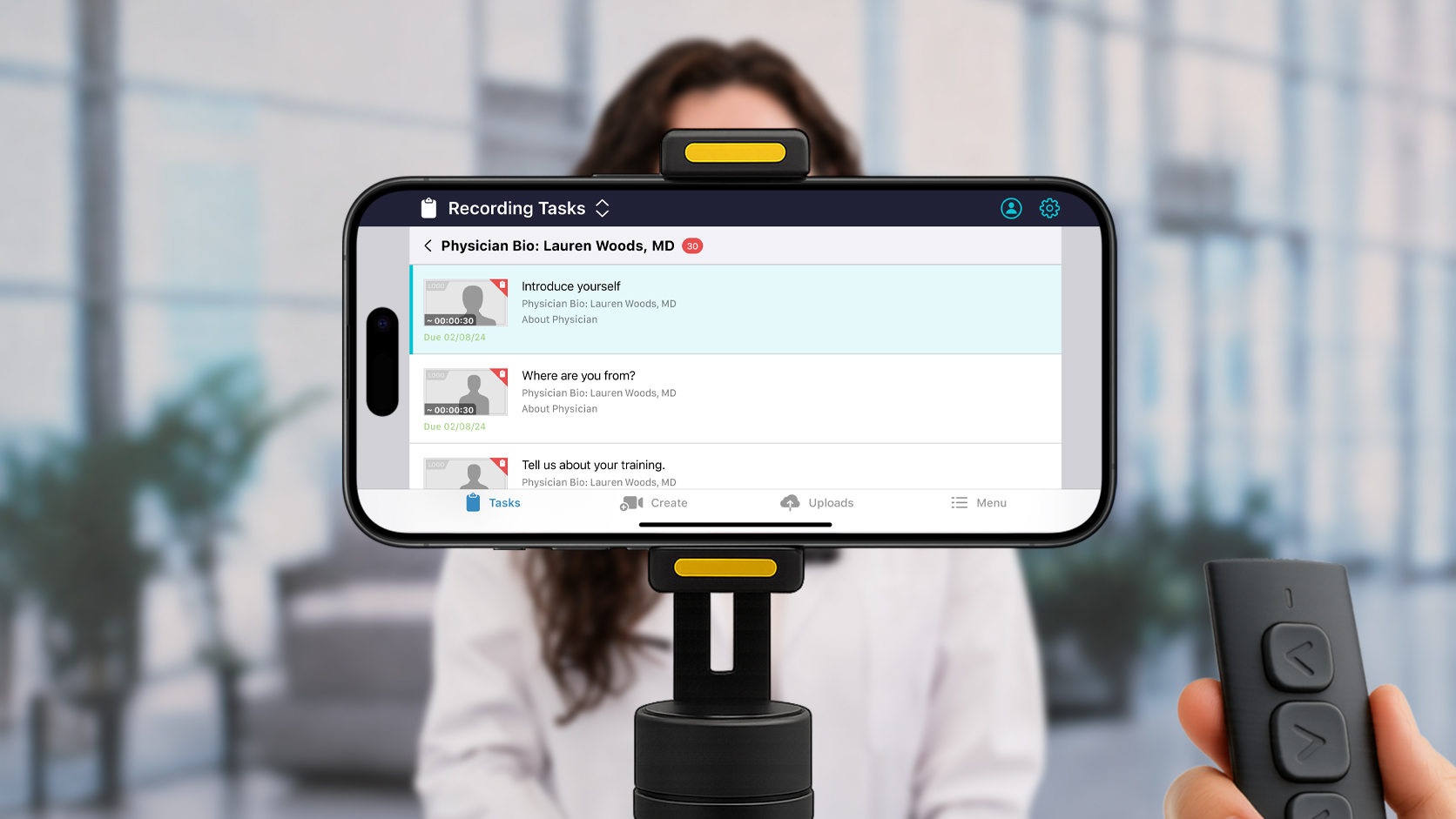 Turn Production Into a Linear Workflow
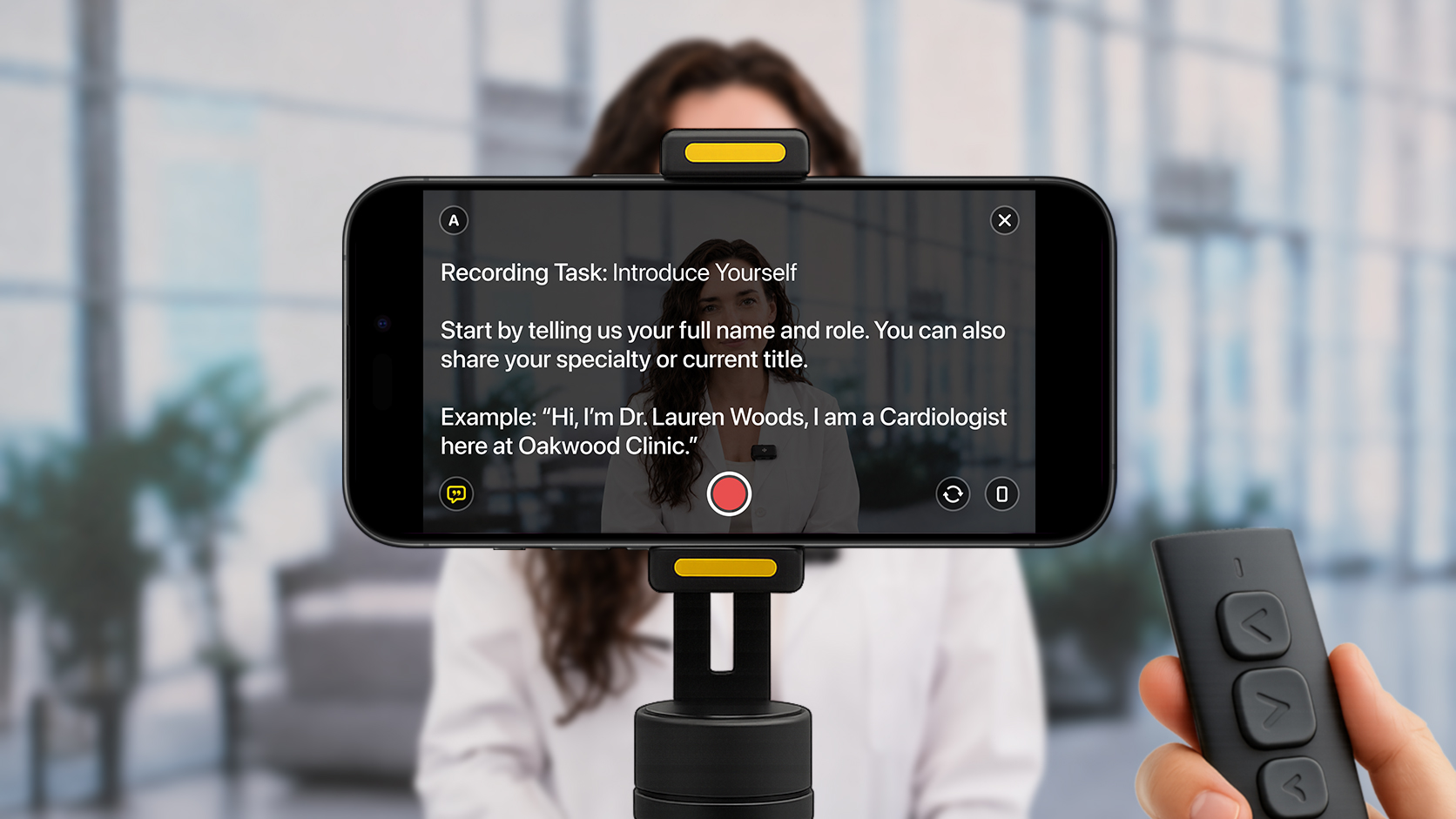 Let Talking Points Guide the Take
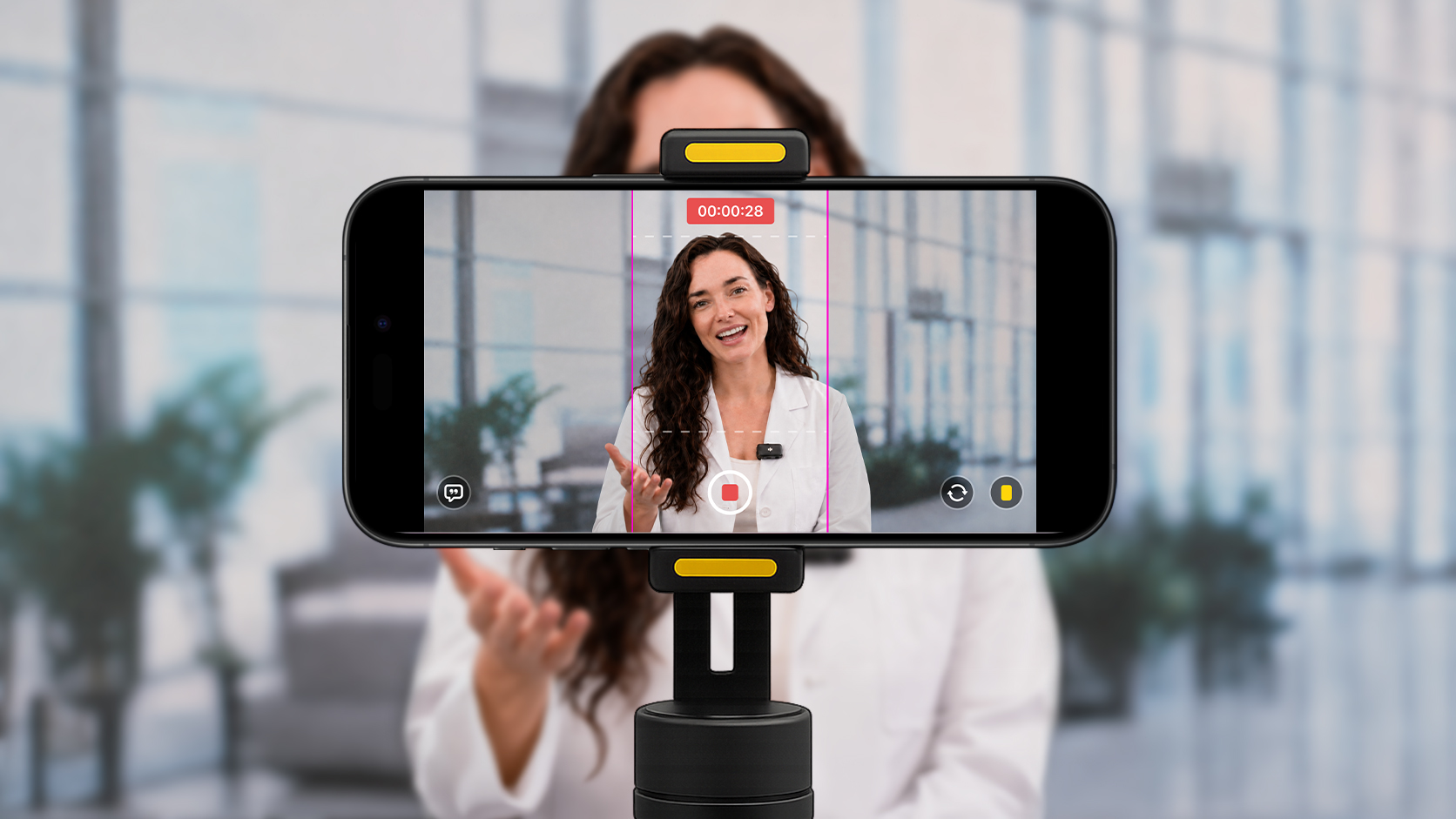 Record Once, Deliver Everywhere
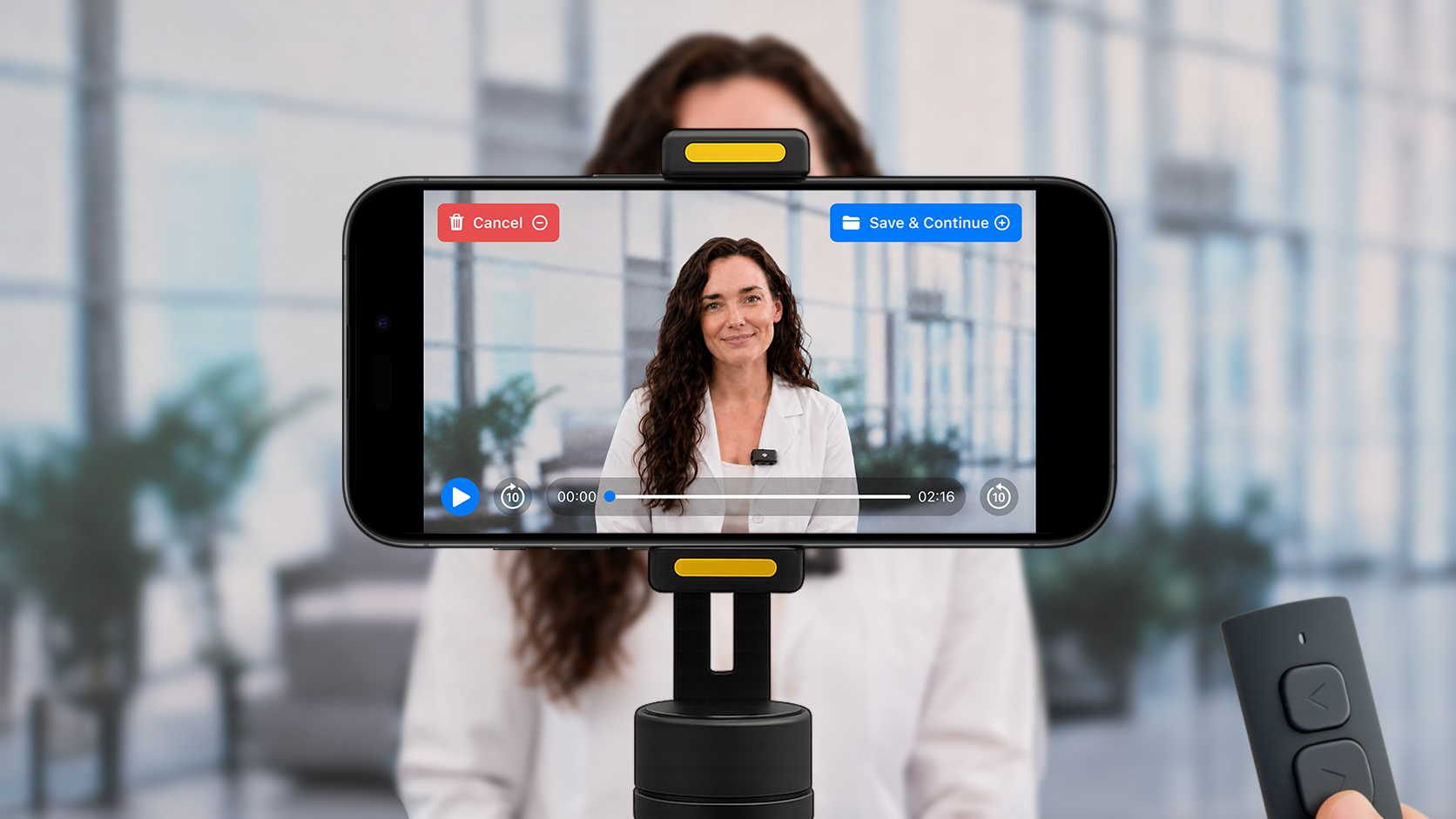 Keep the Session Moving Forward
A Professional Studio That Fits in a Flight Bag
Lights, branded backdrops, microphone, iPhone stand, Bluetooth remote, and an iPhone with Cyrano Studio preinstalled. One person can carry it and set it up alone.
3. Post-production: Cyrano Pro Edits
Editing workflow that turns feedback into a system
I collaborated with our video editors, Customer Success, our CTO, and the development team to turn editing preferences into a repeatable system. During onboarding, we captured each customer's branding, intros, outros, music, pacing, lower thirds, and graphics, so every first edit started from their style instead of a blank guess. From there, teams refined videos with timestamped comments, file attachments, and edit requests like updating a lower third, swapping b-roll, or changing music. With every round, the system learned the customer's preferences, so each new first edit required fewer revisions and delivered a more consistent brand experience.
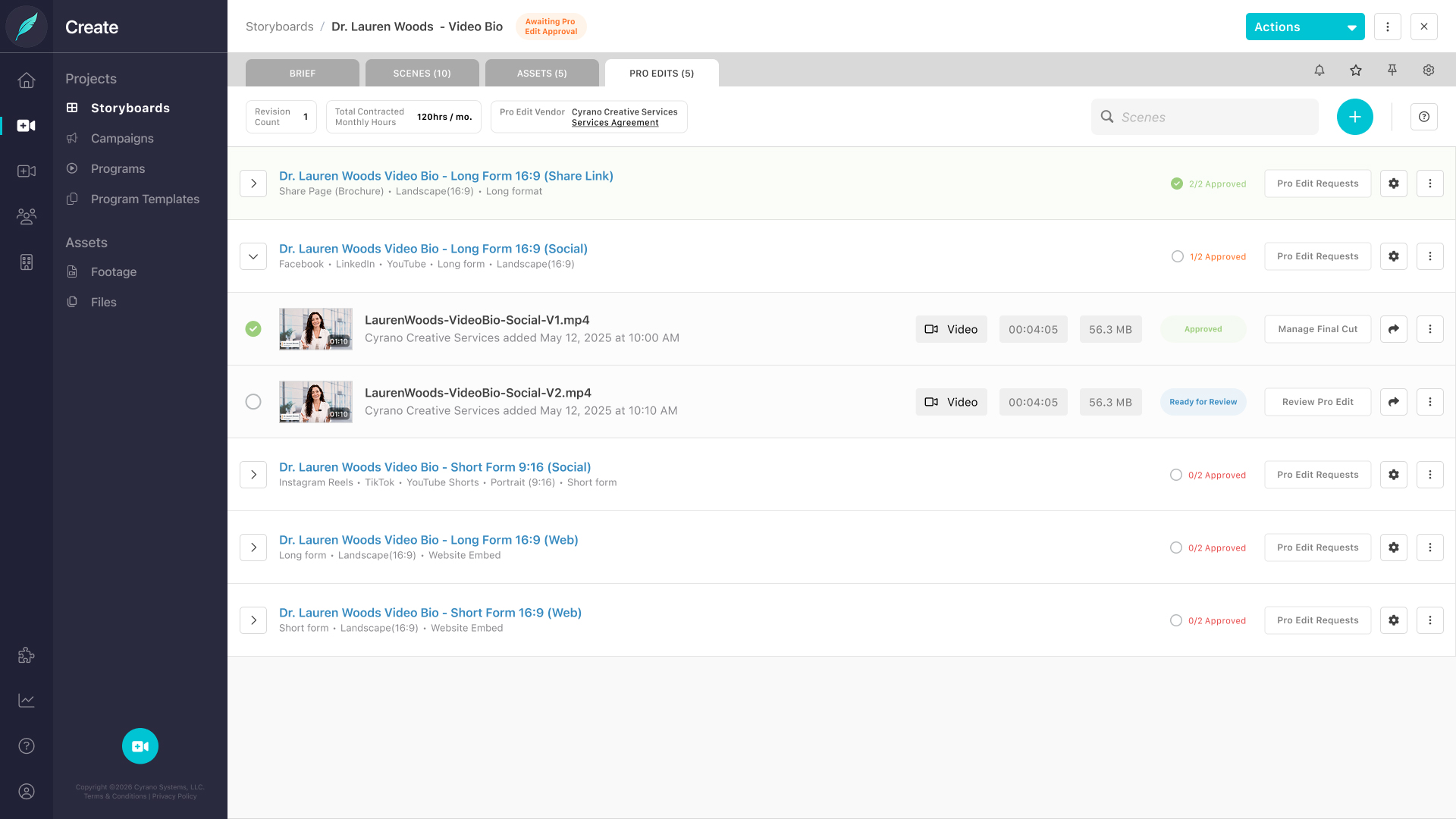 Make Complex Formats Scannable at a Glance
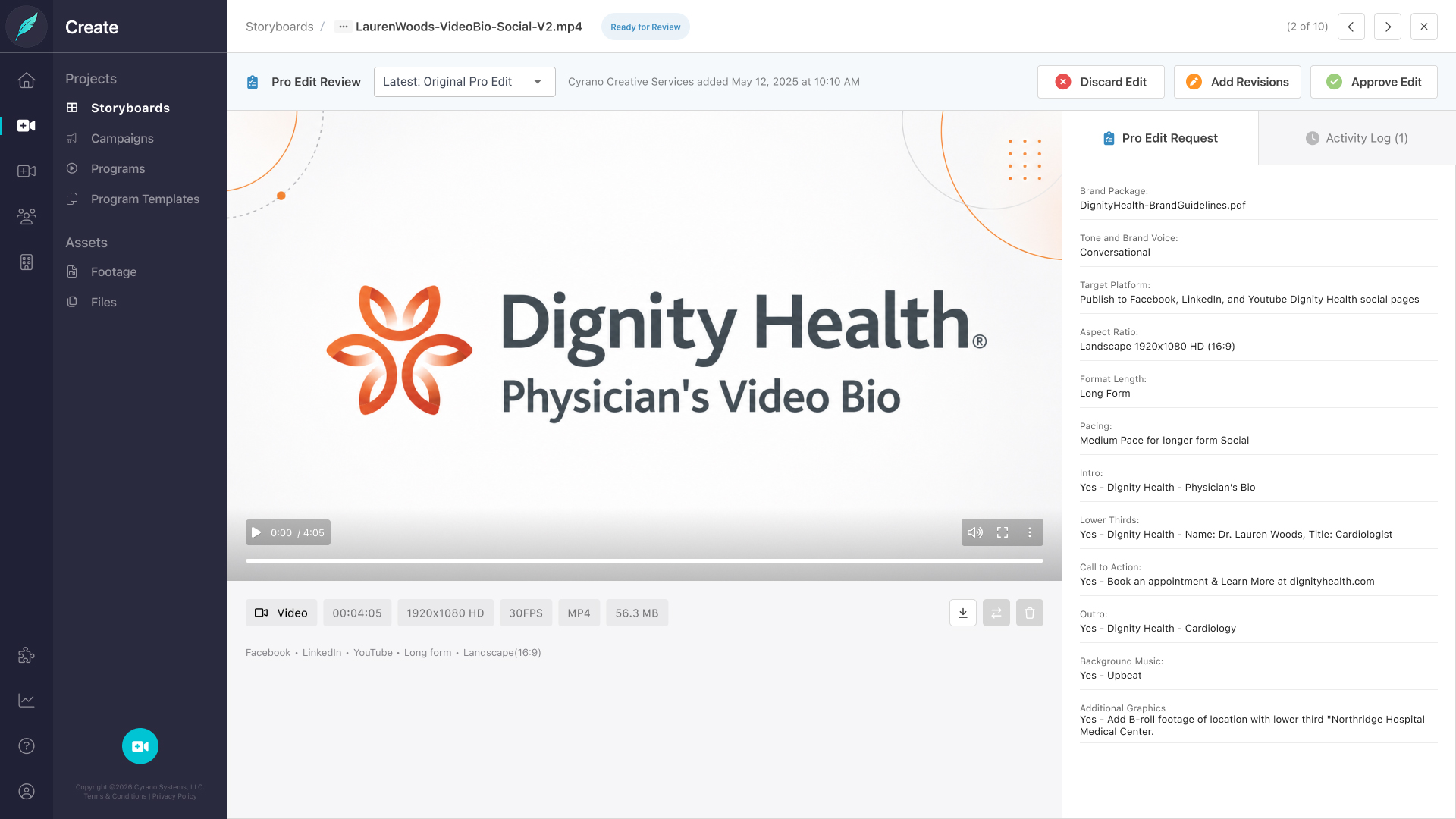 Encode Client Decisions as Structured Data
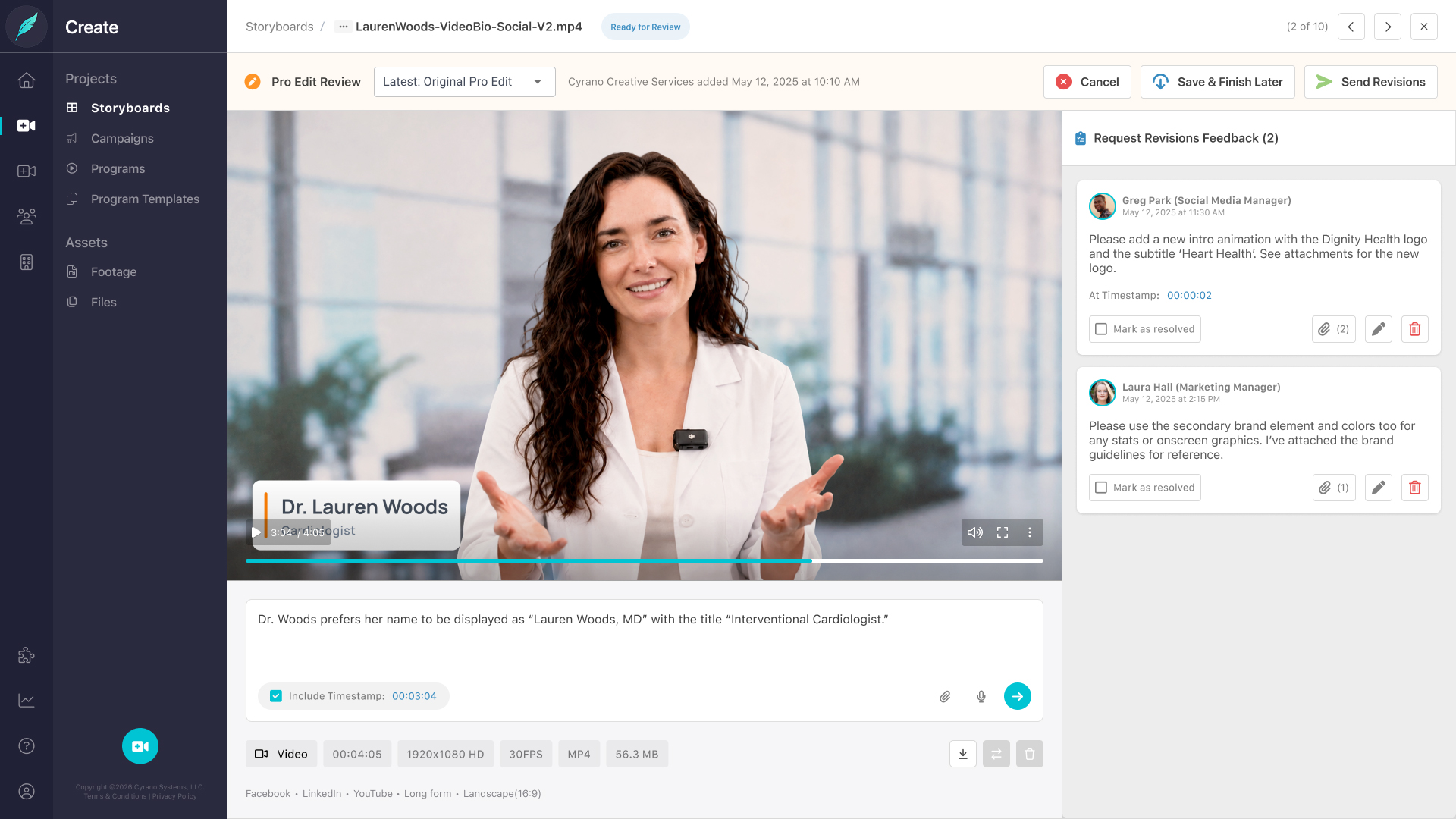 Turn Feedback Into Precise Direction
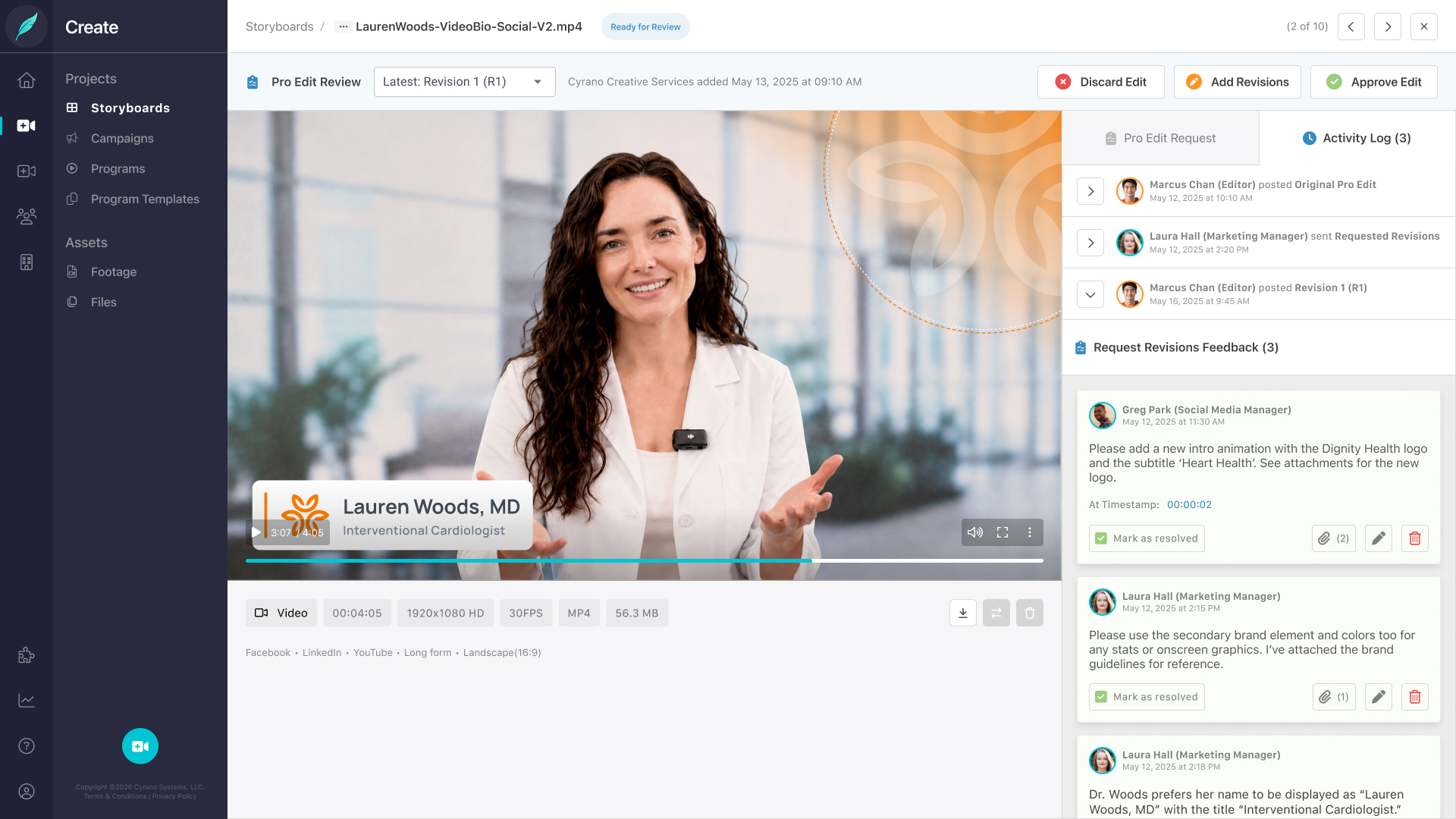 Make the Approval Chain Transparent
Make Complex Formats Scannable at a Glance
The Pro Edits grid groups deliverables by platform, aspect ratio, and long or short form, with every version tracked in place.
4. Distribution: Cyrano Share Pages
Share workflows that meet audiences where they already are.
I partnered with our CEO, CTO, development team, and customer success to redesign distribution around where people already are. Instead of pushing users into another app, I helped create branded share pages that fit naturally into email, Slack, social, and contact lists. I designed a flexible system of templates, from simple video pages to brochure-style layouts with downloadable resources, seasonal branding, and multilingual language controls. Features like transcripts, chapters, and analytics made pages more accessible, discoverable, and measurable, while also keeping brand control intact.
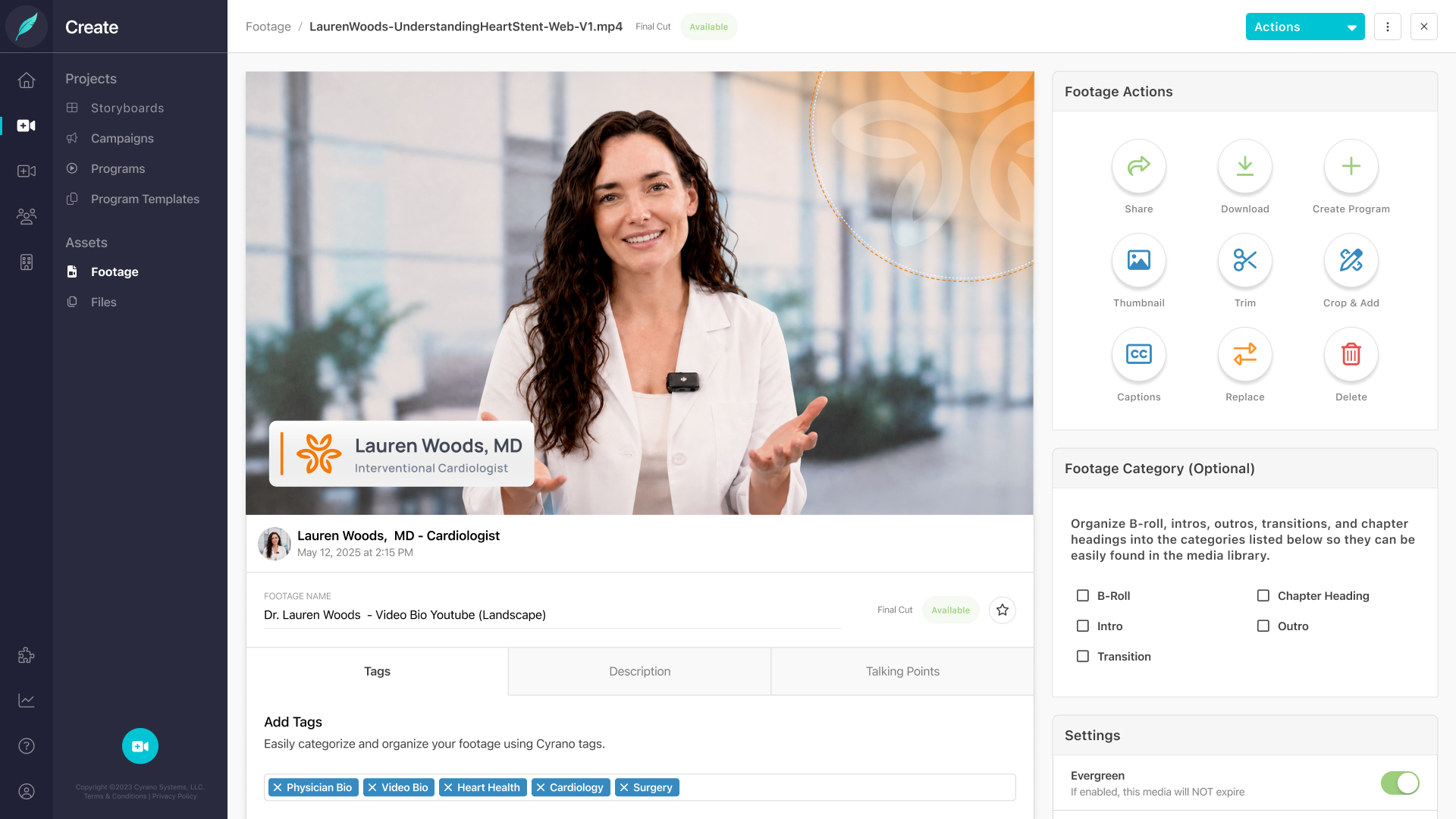 One Recording, Every Delivery Point
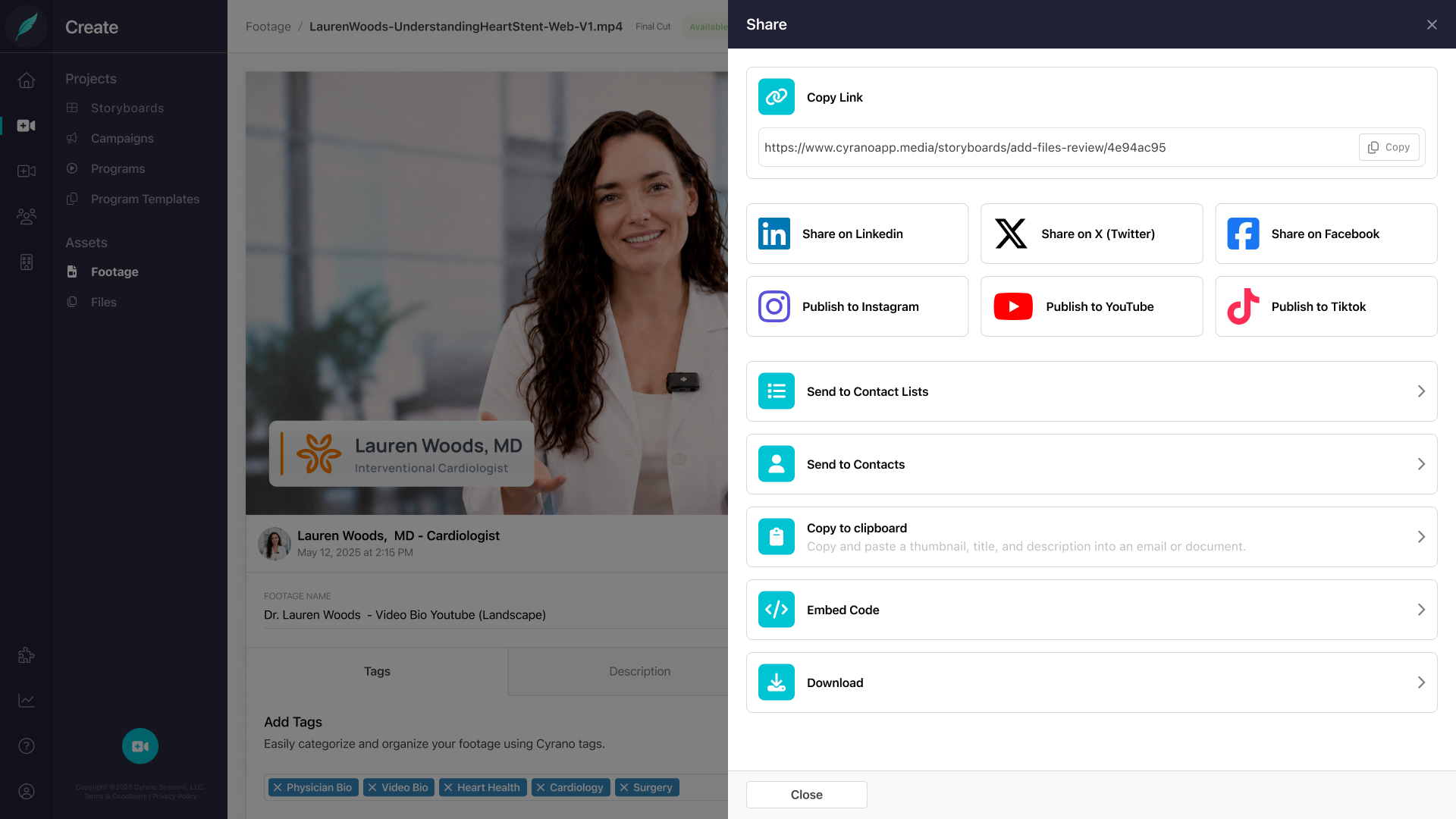 Meet Teams Where They Already Work
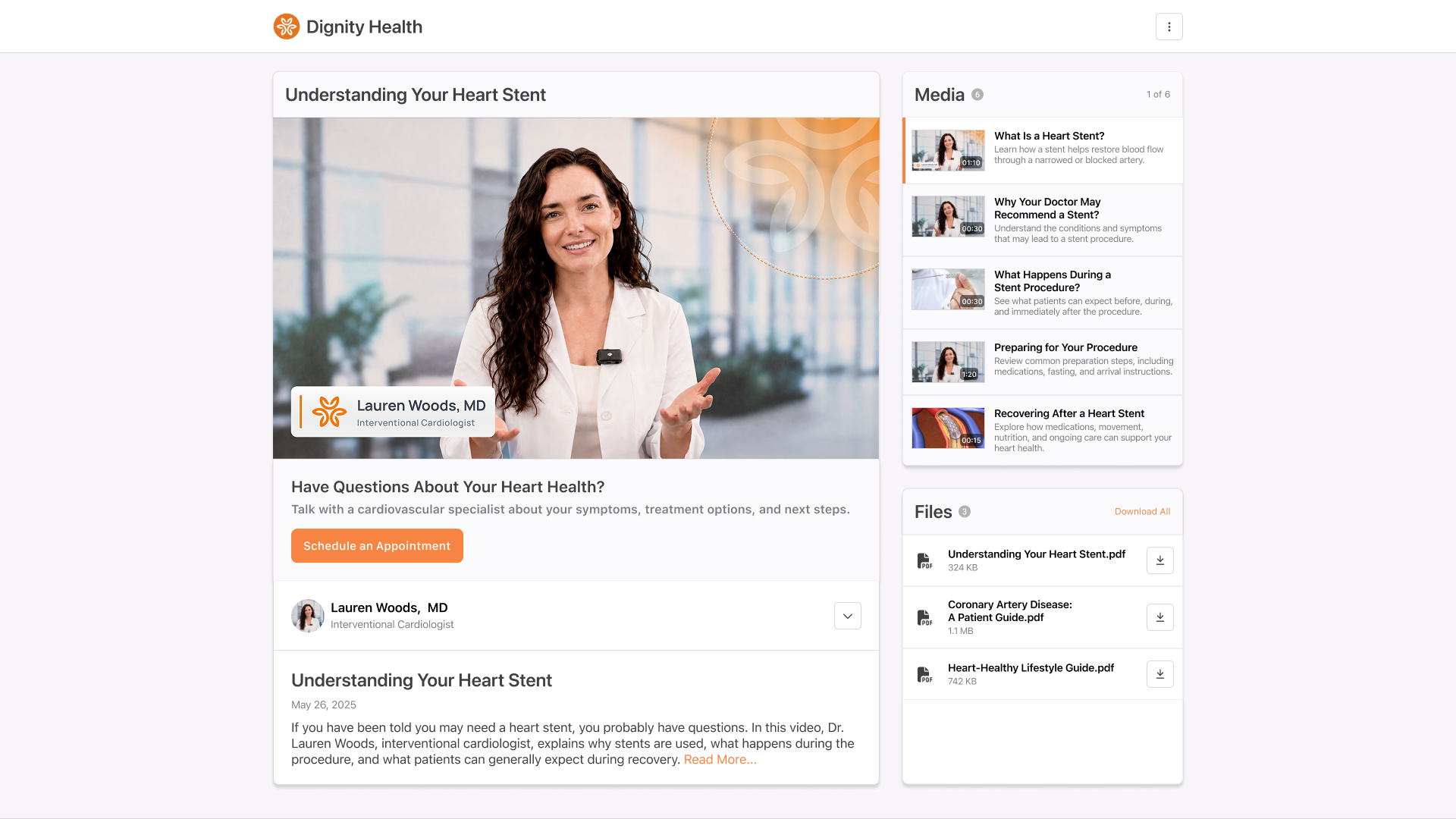 Make Video Findable, Not Just Watchable
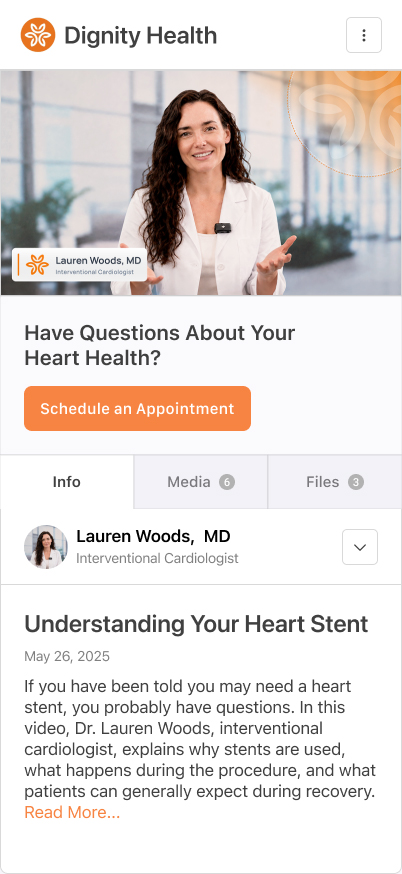 One Layout, Every Screen
One Recording, Every Delivery Point
The final cut lands in the library tagged by topic, specialty, and content type, plus categories like B-roll, intro, outro, and chapter heading. Mark it evergreen or set it to retire.
5. Analytics: Measuring What Landed
See what worked, then make more of it.
I designed the analytics with customer success, the CTO, and the CEO so a health system could see which messages actually landed, broken out by audience, and feed that straight back into the storyboard templates so the next round started from what already worked instead of guesswork. A client partner kept us honest about which numbers actually mattered to the people using it. It closed the loop between what a team made and what it should make next.
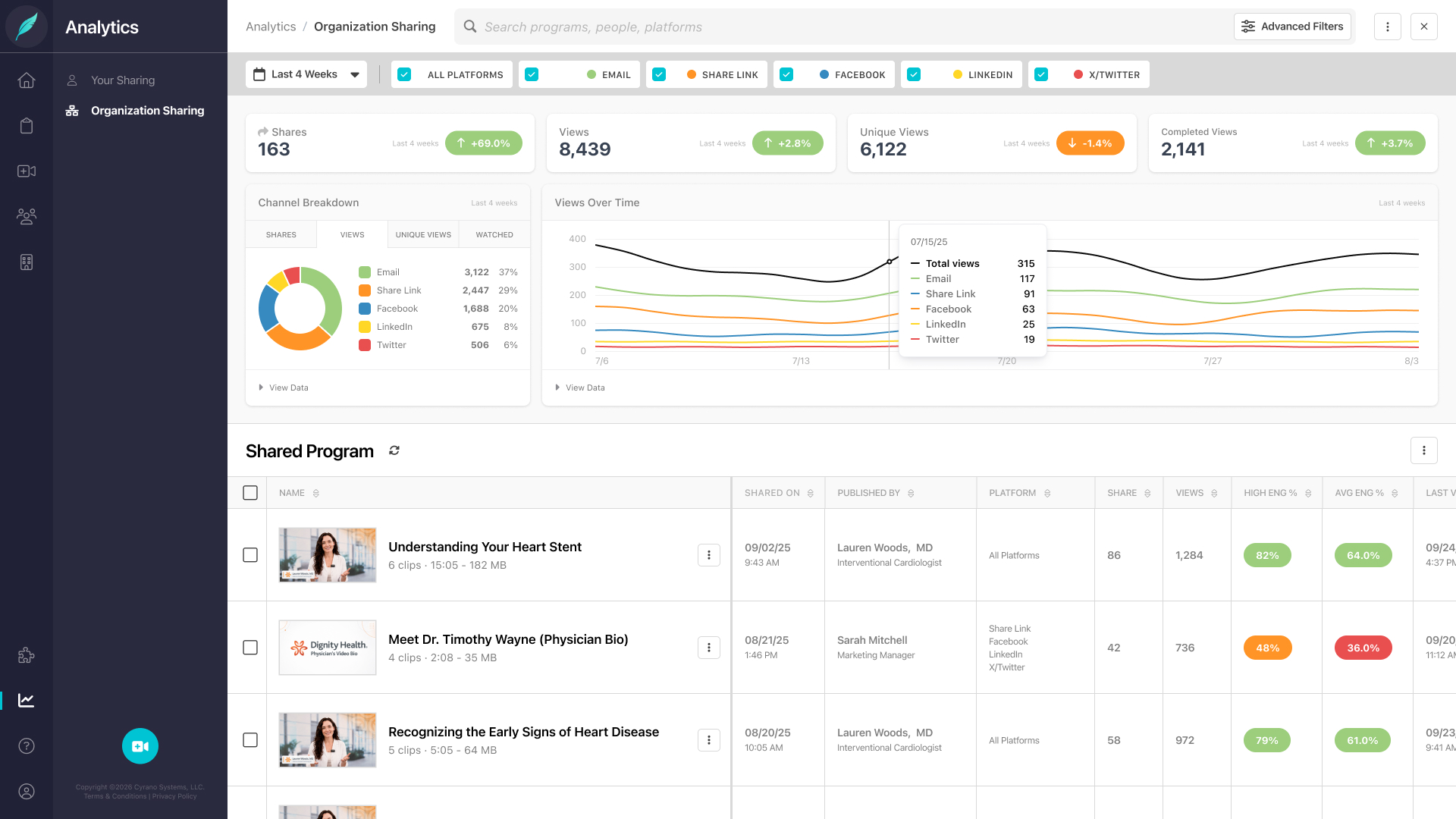 Organization Sharing Dashboard
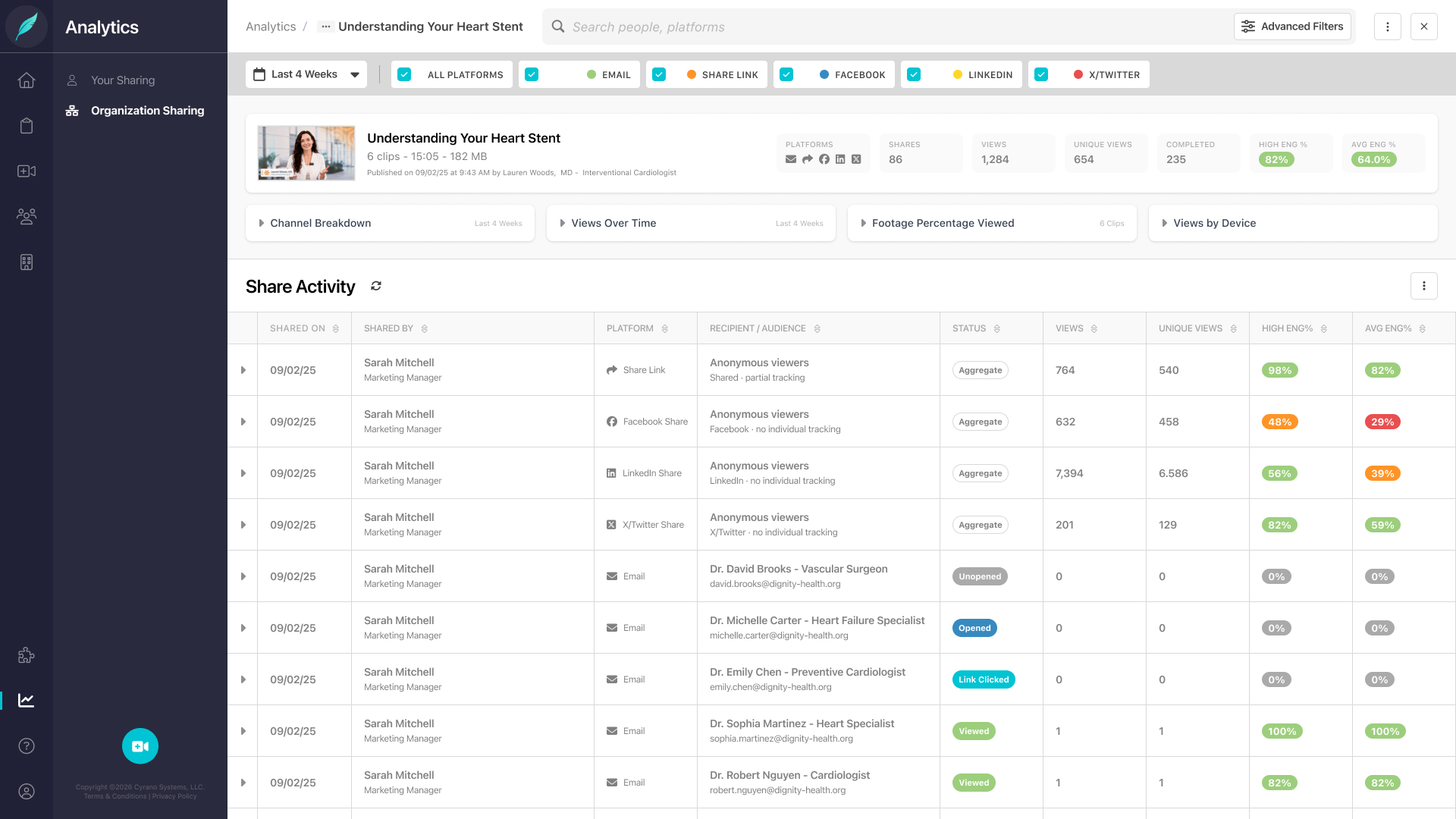 Program Share Views Detail
Organization Sharing Dashboard
See all programs shared across your organization at a glance. Filter by channel to understand which communication method performs best.
The real design problem was never any single stage. It was the handoff between them. Every decision made in one stage travels to the next as structured data instead of a conversation. Talking points written in preproduction appear on screen during recording. Brand direction locked in the storyboard reaches the editor as a prefilled request. Feedback pinned during review resolves before the next cut. Approved footage lands in the library already tagged for every platform it was built for. Each person in the workflow inherits a complete brief, and the time saved compounds because the decisions compound.
Design System
One system, hundreds of brands.
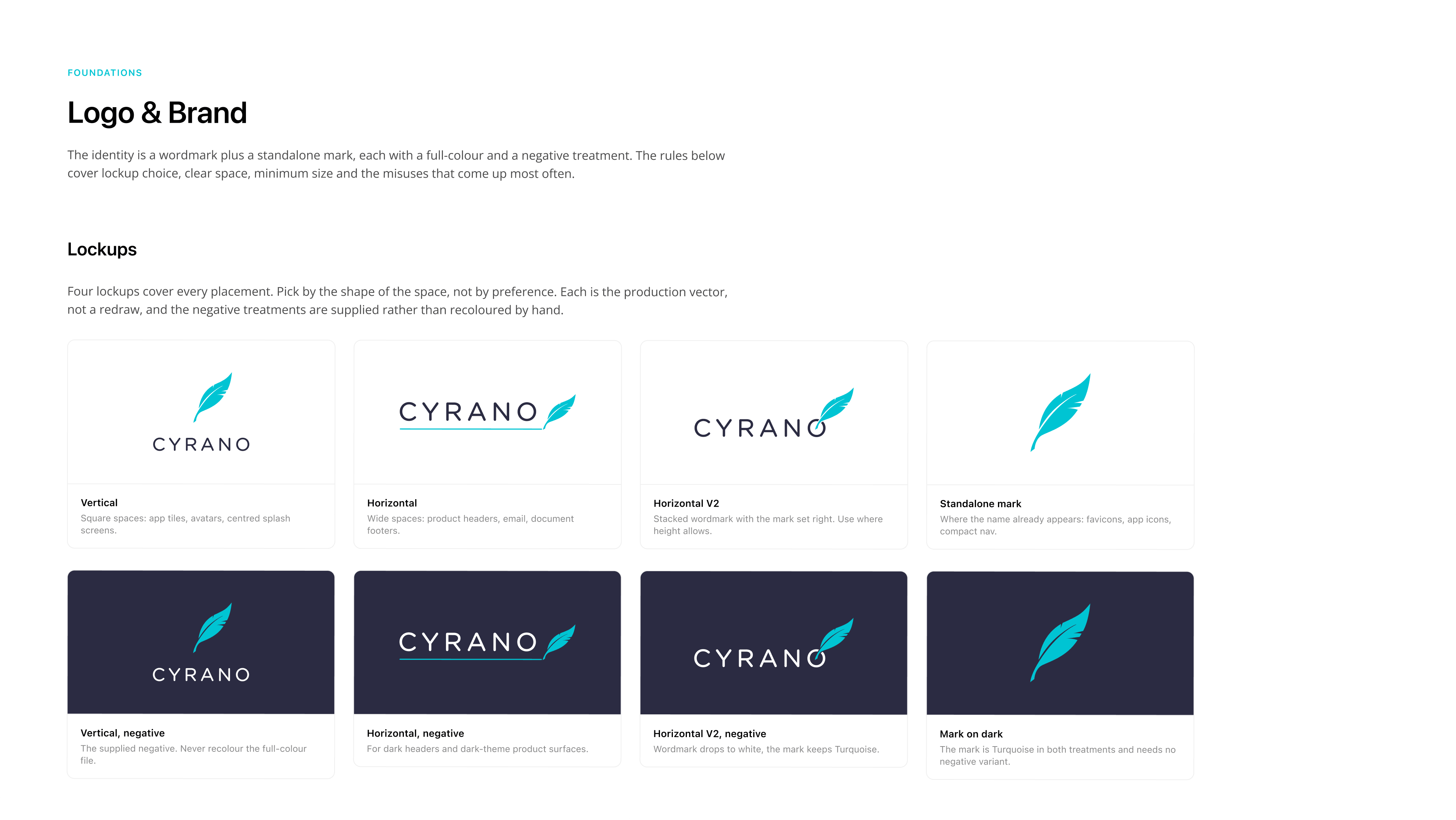
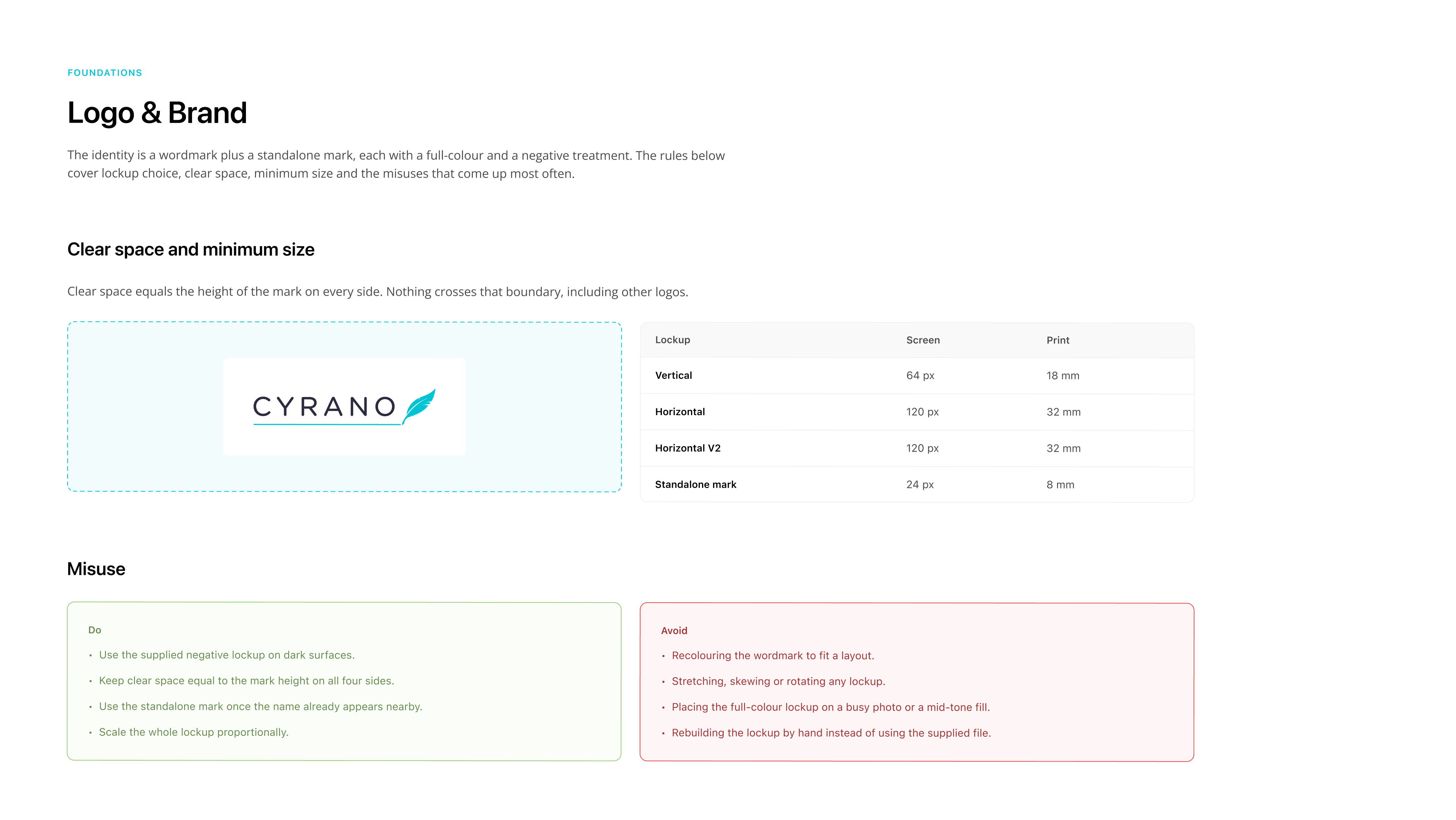
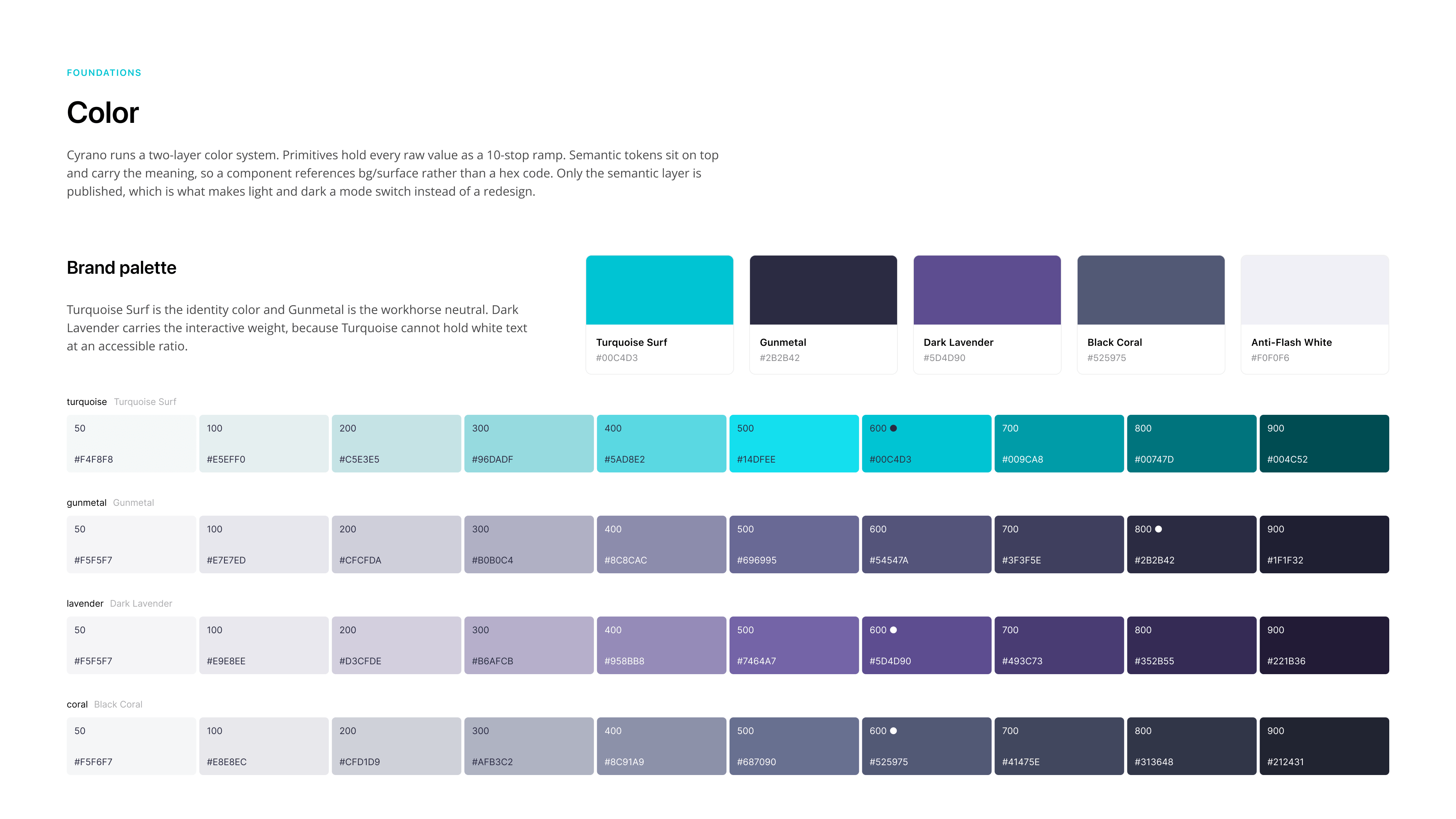
The design system is the one part I owned almost end to end, and it had two jobs: keep 16 products consistent, and let every health system still look like itself. I built it around a small set of brand inputs, a light color, a dark color, a 1:1 logo, and a 16:9 logo, so the entire product reskinned per client without a designer touching it and every share page and playback page rebranded automatically. It is the piece that let the whole thing scale.
 Design System
 Logo Lockups
 Clear Space & Misuse
 Color Primitives
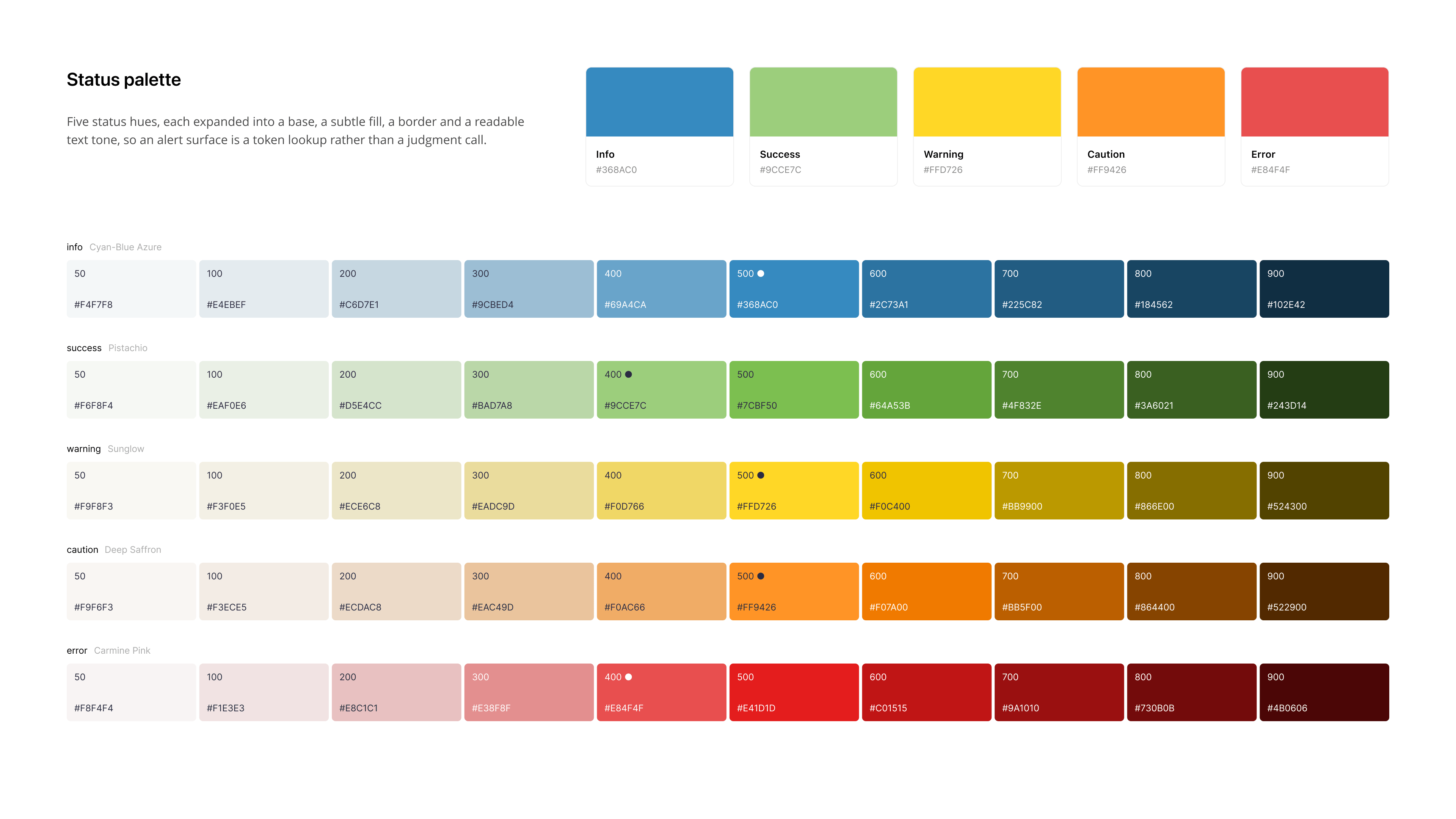 Status Palette
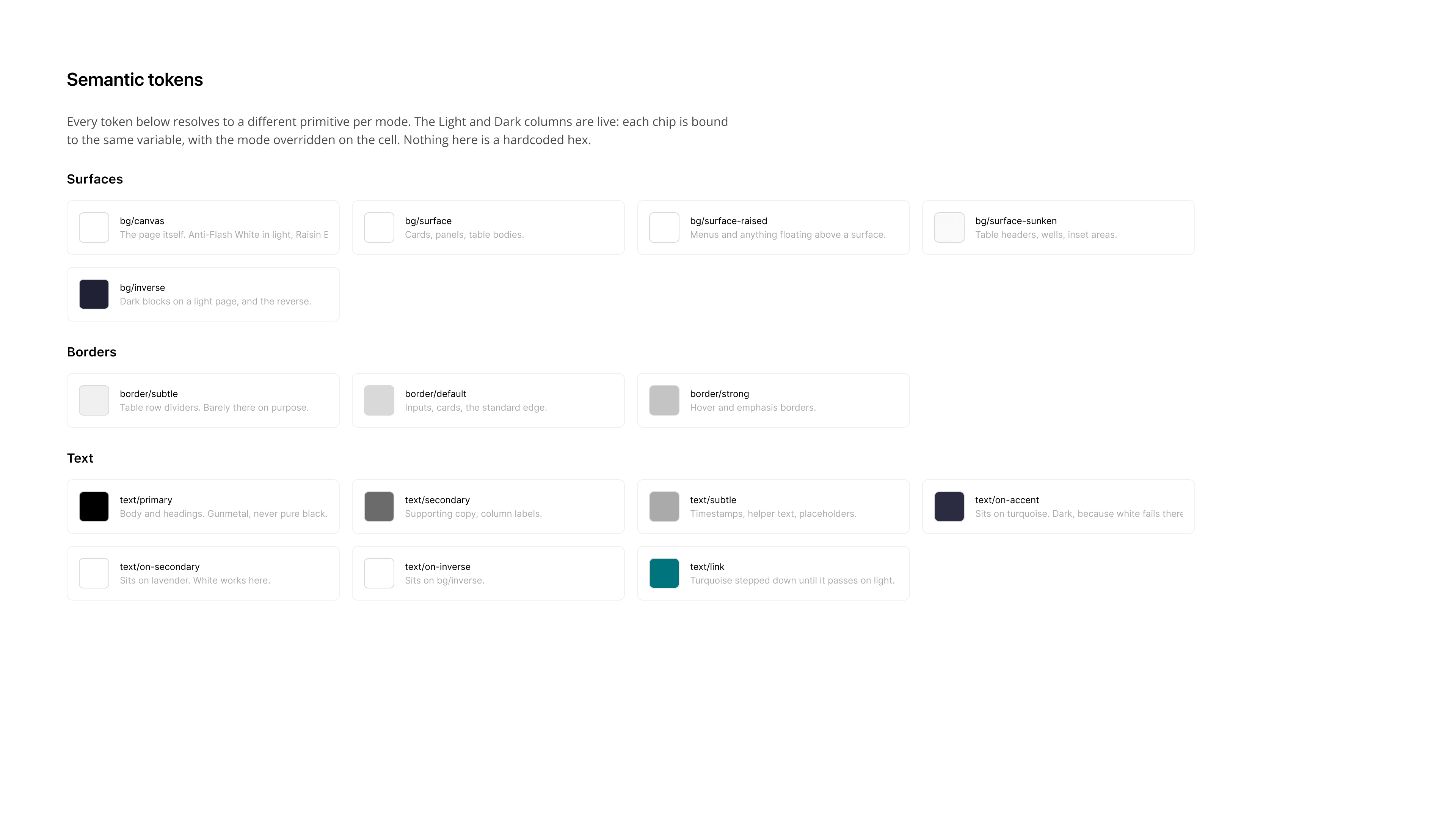 Semantic Tokens
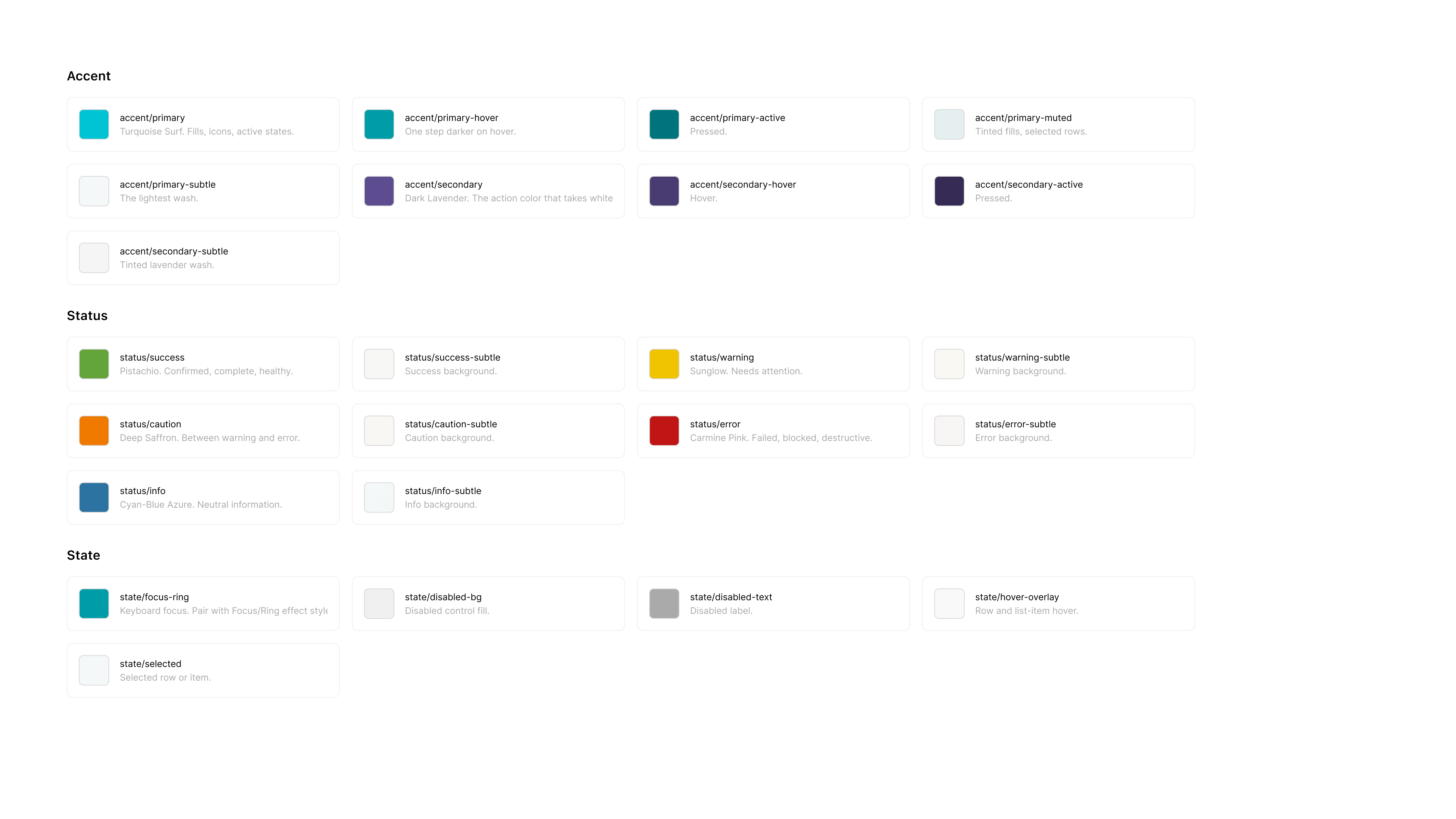 Accent, Status & State Tokens
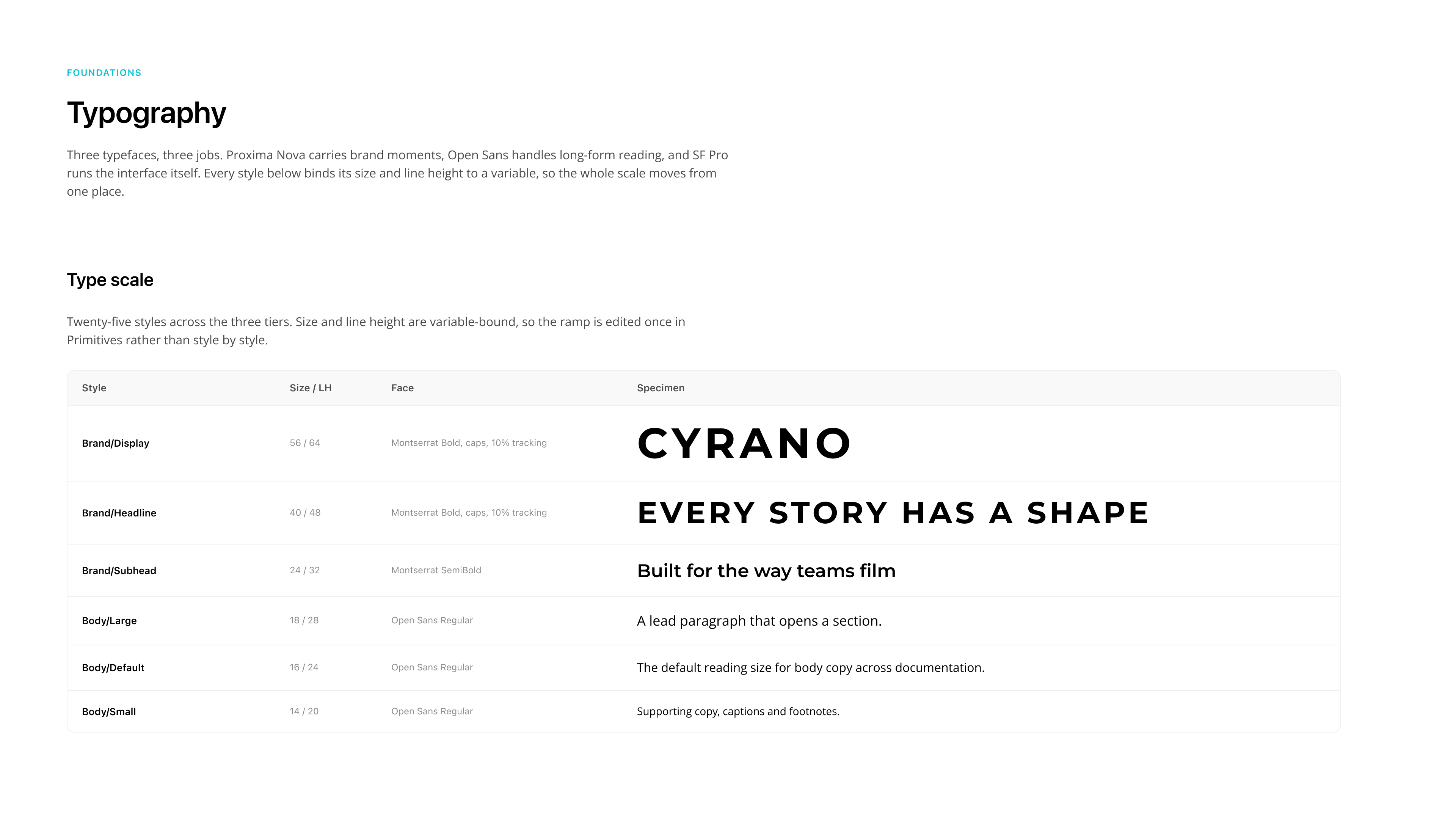 Typography
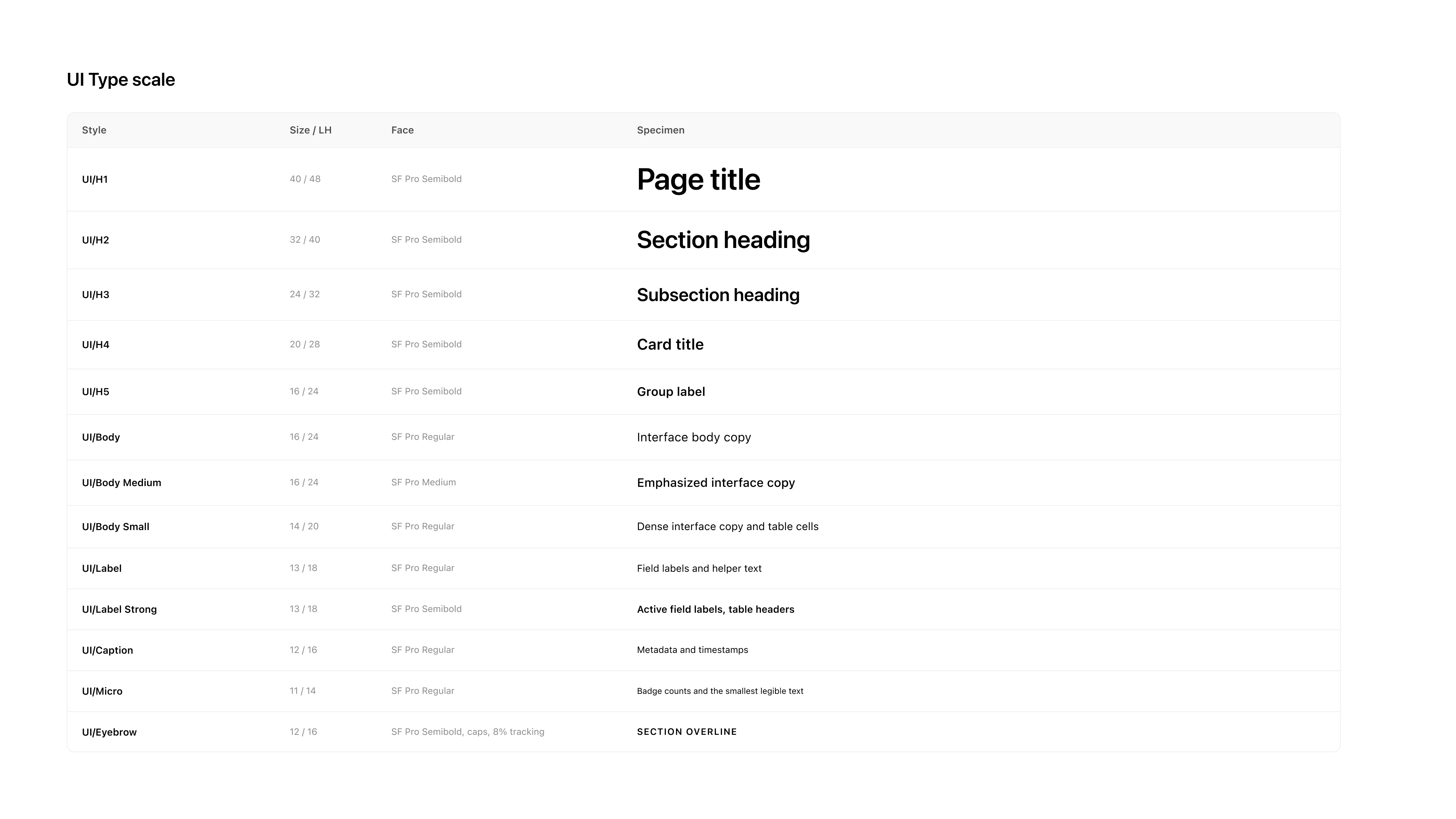 UI Type Scale
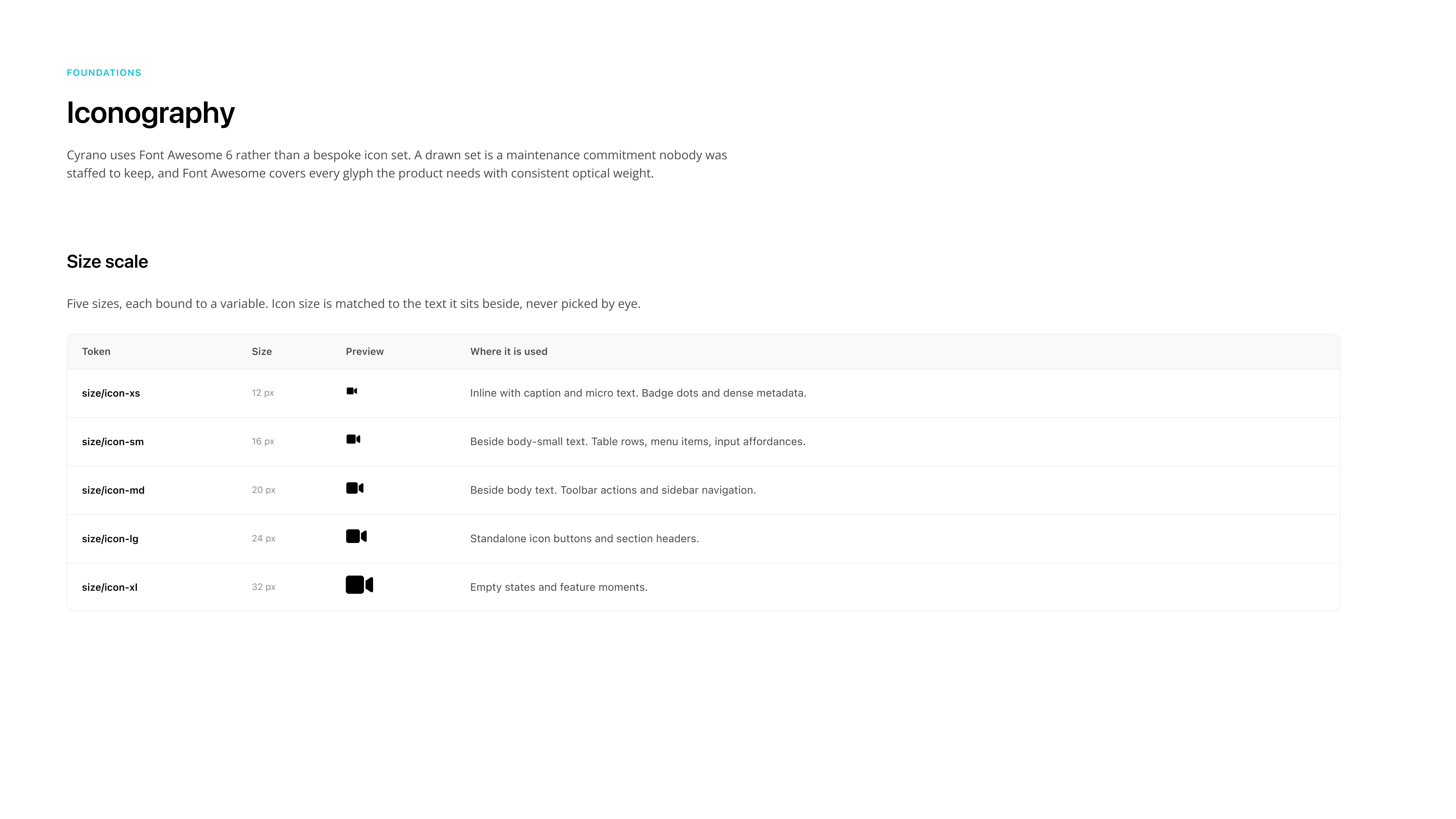 Iconography
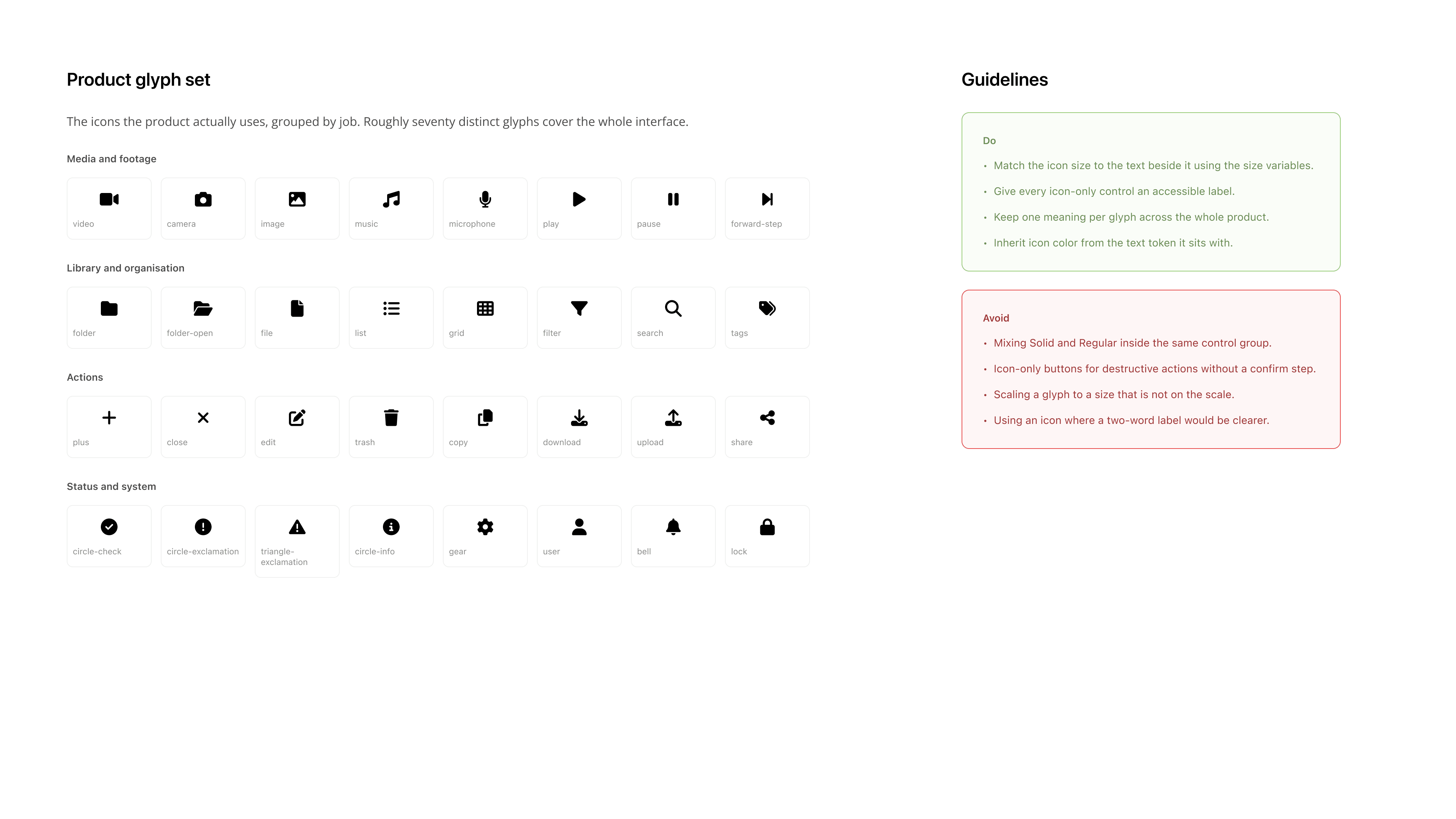 Product Glyph Set
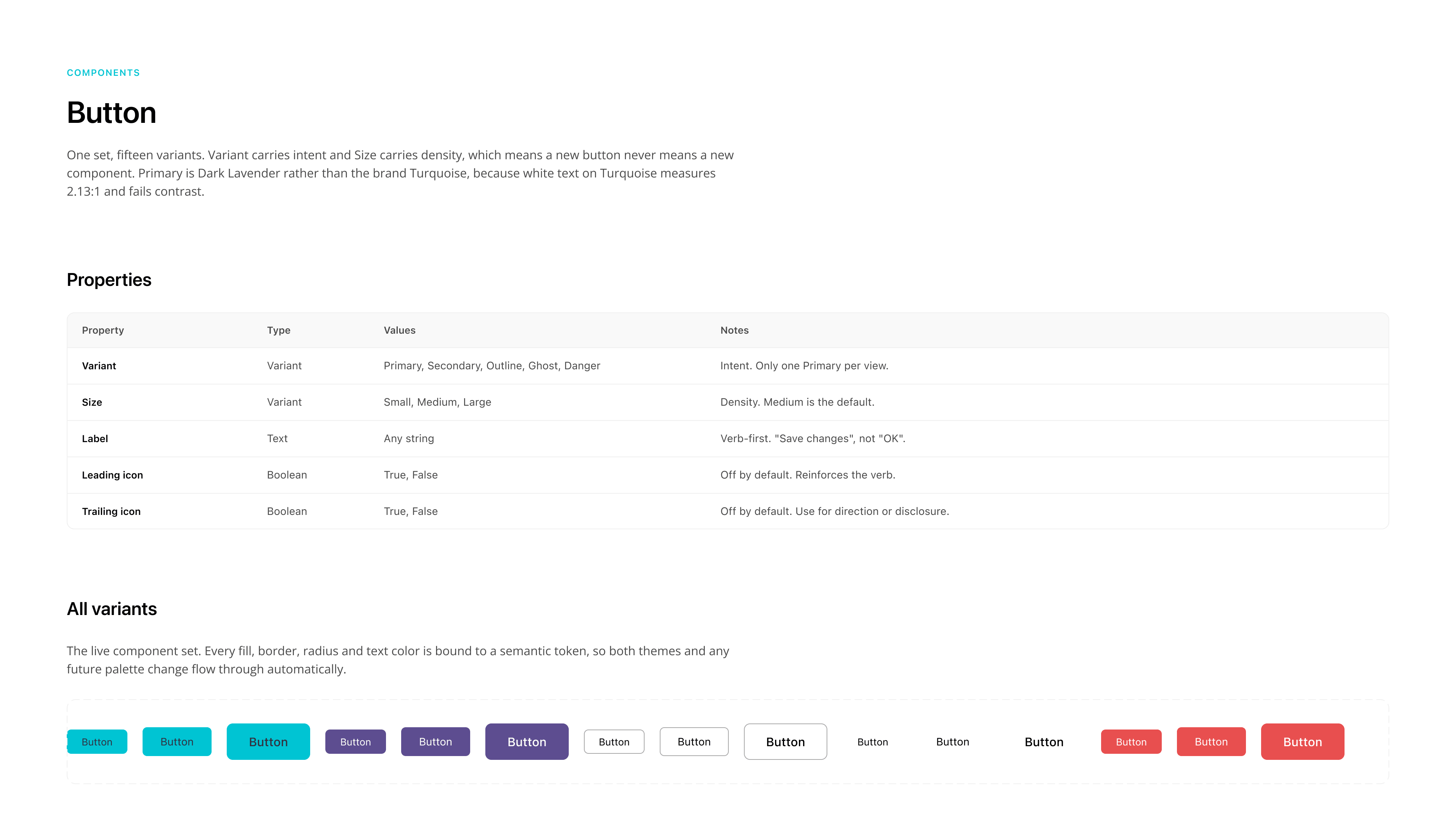 Button
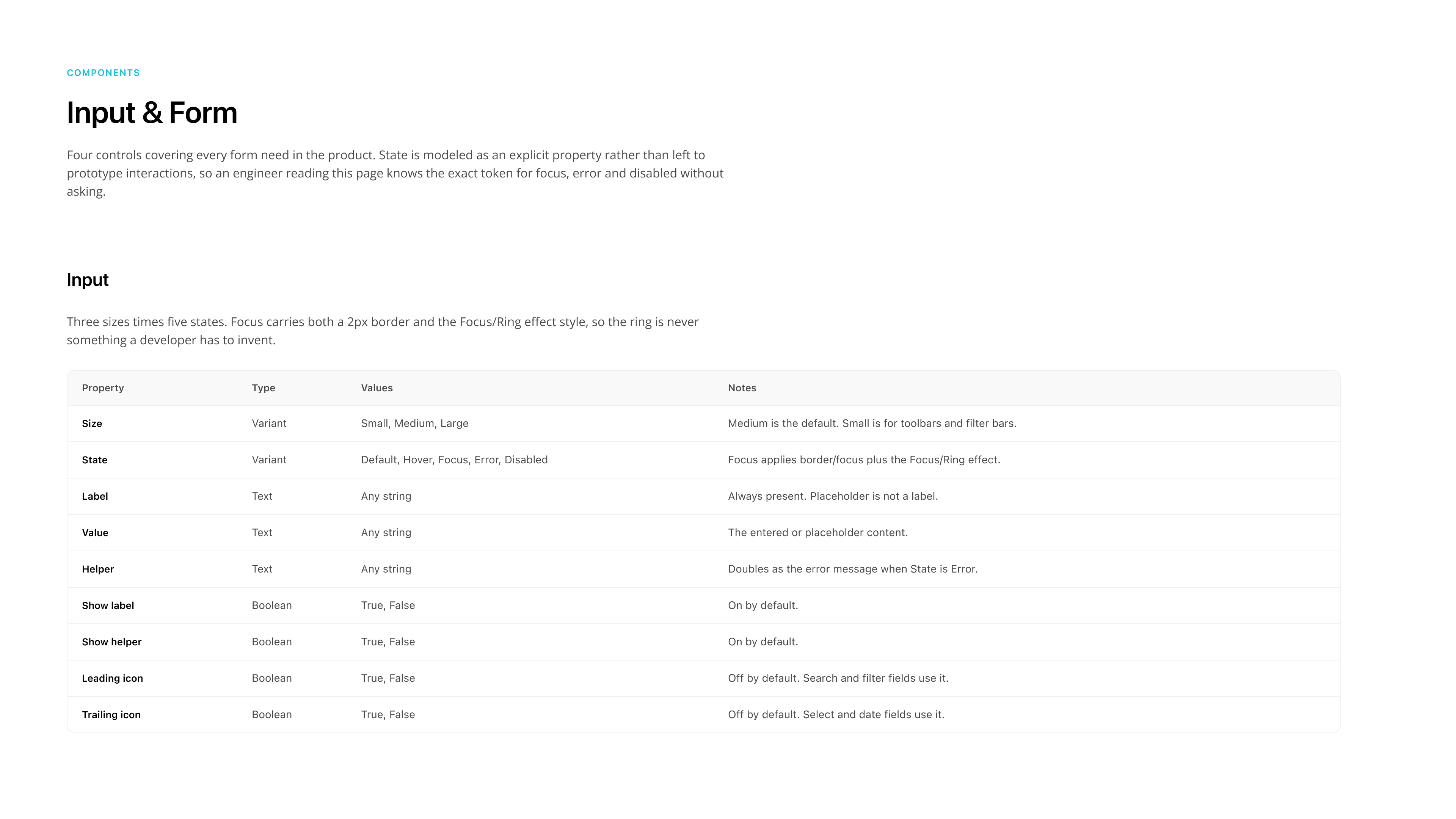 Input & Form
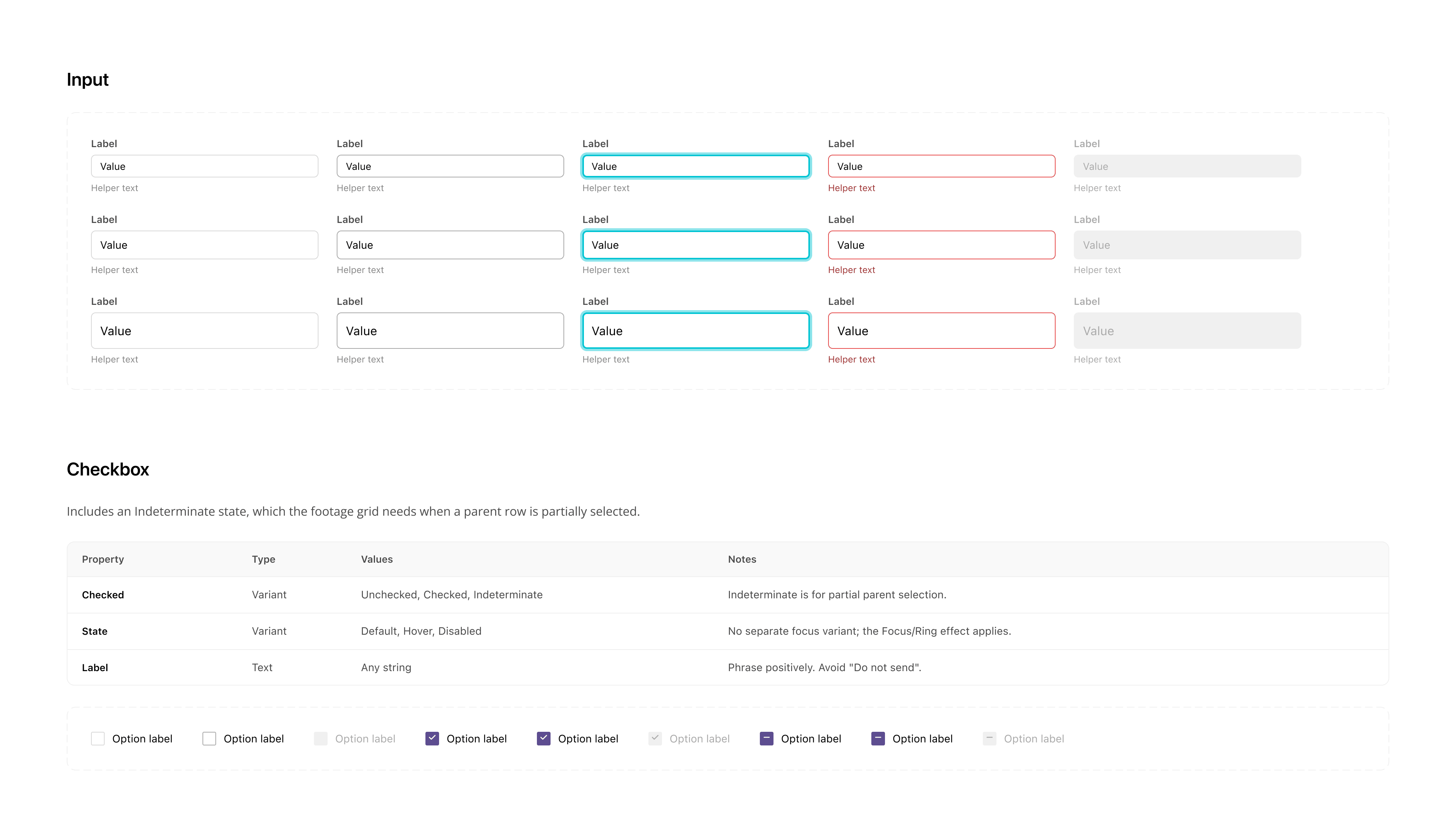 Input & Checkbox
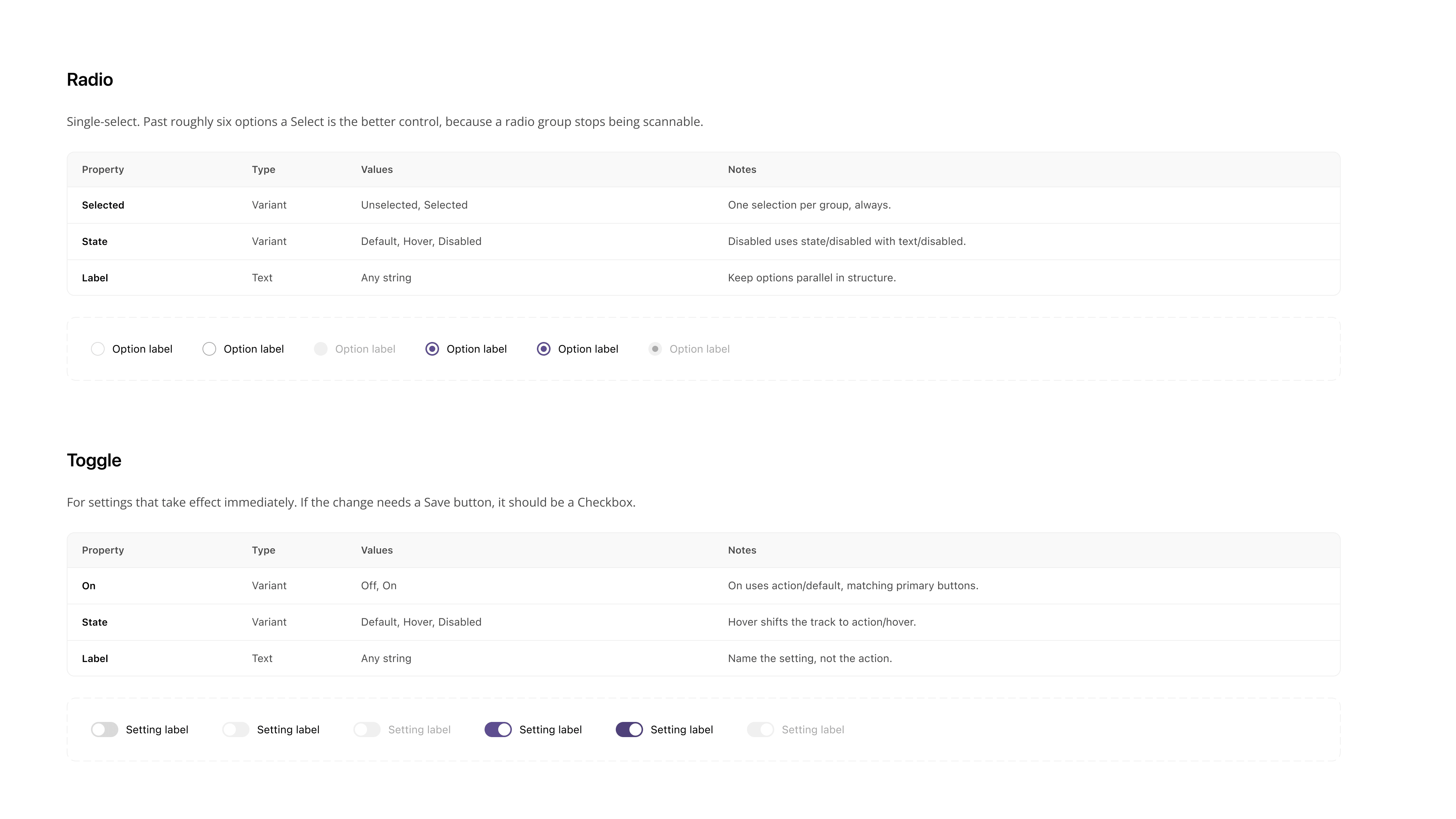 Radio & Toggle
Design System
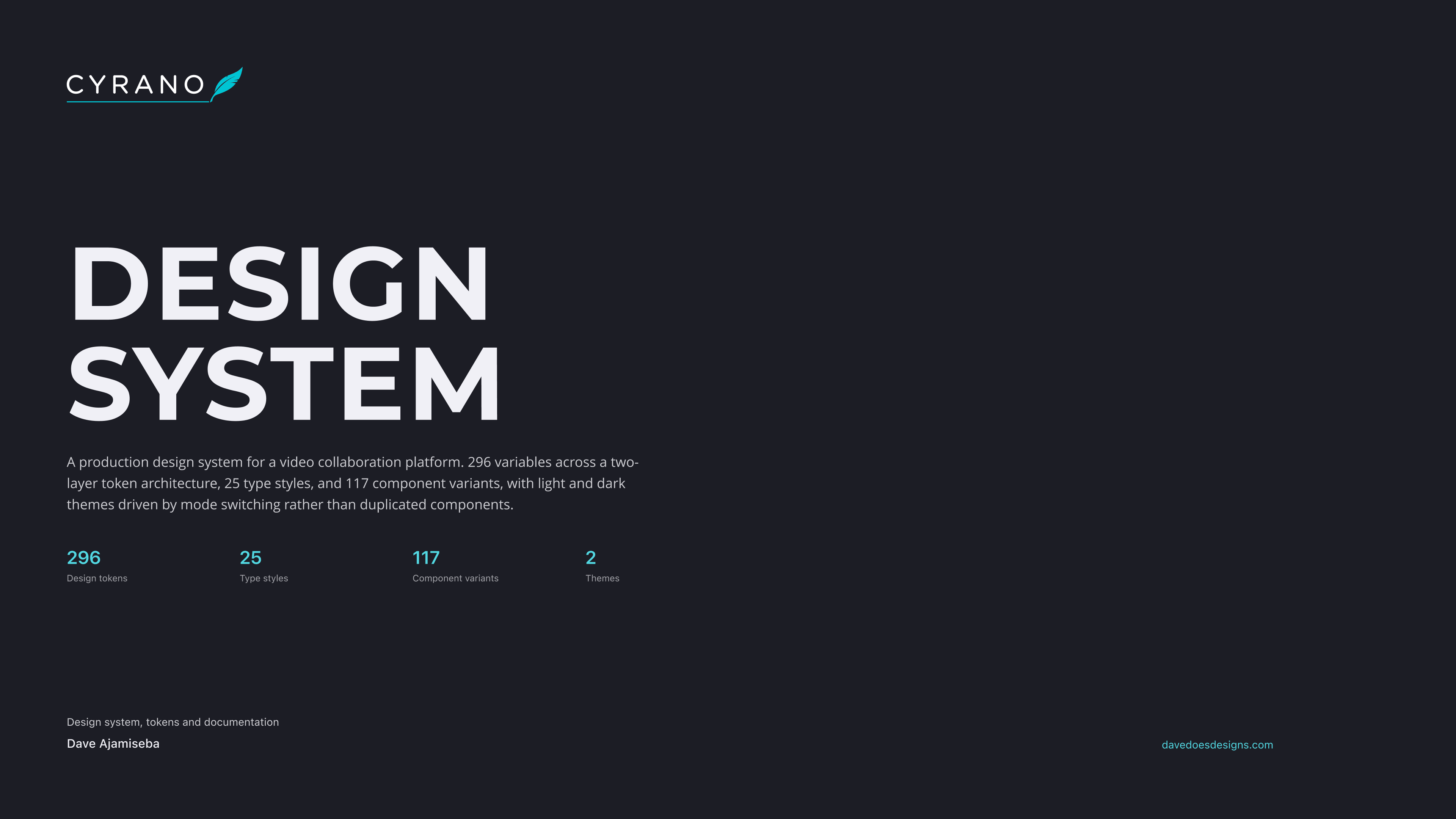
A production design system for a video collaboration platform: 296 variables across a two-layer token architecture, 25 type styles, and 117 component variants, with light and dark themes driven by mode switching rather than duplicated components.
Results
The numbers after launch.
Cyrano transformed how healthcare organizations use video for communication. By simplifying production to a template selection and single recording session, organizations reduced production costs, shortened time to delivery, and scaled video creation without added complexity. Teams could now publish consistent, branded video content across multiple platforms, from YouTube to Instagram, with minimal effort. But the real impact showed in the engagement data.
-
67%
lower cost than traditional production
-
750%
more social engagement
-
3
videos filmed in 30 minutes per person
-
The thing I really love about Cyrano is it's super easy to use and it's cost-effective. We shoot the videos on our cell phones, we get them out in a couple of days and it's really fast and efficient.
Siri Nelson
CEO of Marshall Medical Center
-
We wanted to communicate better with all of our employees. It's so important when we have just south of a thousand employees to make sure they feel connected to the important work that we're doing and Cyrano can help us with that.
Dave Schreiner
CEO of KSB Hospital
-
Cyrano empowered our small team to create impactful videos easily and unleash our creativity without the hassle of editing.
Julie Badot
Marketing Manager at Cape Cod Healthcare
Reflection
What six years in health care video taught me.
Almost every part of Cyrano came from a conversation, not a whiteboard. There was some whiteboarding, but most of it came out of PRDs, customer interviews, and learning what hospitals actually needed, especially early on, during COVID, when we were moving fast to make videos that genuinely helped people. That part was rewarding.
The template library came from asking health care teams what they actually needed to say, mocking those use cases, and testing them. Analytics told us which storyboards resonated with staff, patients, and communities, and we refined the messaging from there until we understood why certain videos took hold.
The studio kit came from trial and error with manufacturers in China, tested until a marketing coordinator could carry it onto a plane. The app, the kit, the recording tasks, and the pro edits all went through a lot of device testing before they held up in the field.
The decision I would defend hardest is pushing back on the inherited video app. The CEO wanted health systems to adopt yet another app. My read, from being close to the users, was the opposite: do not force adoption, meet people where they already are. The share pages became the first touch point, and the analytics settled it. Almost no one adopted the app, and the share pages carried the views, because we were not asking anyone to download anything. The lesson was not that the execution was wrong. It was to trust your gut when you are close to the people you are designing for, and to make a hard call defensible by backing it with the data.
And on cost: no amount of design polish removes cost when you are rebuilding the same structure every time. The savings came from productizing the production line, not from prettier screens.